Find a TherapistReady to get started?Ready toget started?Add your email to continueEmailGet startedBy submitting your email, you agree to receive reminders and marketing communications.

Ready to get started?Ready toget started?Add your email to continueEmailGet startedBy submitting your email, you agree to receive reminders and marketing communications.

Ready to get started?
Ready toget started?
Add your email to continue
Get started
By submitting your email, you agree to receive reminders and marketing communications.
Mental Health HomepageConditions LibraryConditions CategoryConditions CategoryWhat’s the Difference Between an Anxiety Attack and Panic Attack?
Table of Contents:OverviewKey Differences Between Anxiety and PanicWhat Are Anxiety Attacks?Common Causes & Risk FactorsWhat Does an Anxiety Attack Feel Like?What is a Panic Attack?Common Causes & Risk FactorsWhat Does a Panic Attack Feel Like?How to Calm Anxiety or Panic Attacks
Anxiety DisorderRead Time: 9 Minutes

Published On: November 15, 2019

Reviewed On: November 15, 2019
Updated On: May 21, 2024


OverviewUnderstanding the differences between a panic attack vs anxiety attack can feel confusing since so many of the symptoms are very similar. But the truth is, these are two different conditions, and there are a few key things to know about panic and anxiety attack symptoms that can help you determine which you might be having.The primary difference between an anxiety attack vs panic attack is that a panic attack generally comes on very suddenly. It’s also typically over quickly, too. An anxiety attack, however, tends to build up for a while, and anxiety attack symptoms most often last for a significantly longer period of time than a panic attack might.While there are many similarities between an anxiety attack vs panic attack, — including that both will result in extreme, sometimes overwhelming feelings and emotions — there really are a number of other differences, too. In this article, we’ll take a deeper look at anxiety vs. panic attacks.
Overview
Understanding the differences between a panic attack vs anxiety attack can feel confusing since so many of the symptoms are very similar. But the truth is, these are two different conditions, and there are a few key things to know about panic and anxiety attack symptoms that can help you determine which you might be having.
The primary difference between an anxiety attack vs panic attack is that a panic attack generally comes on very suddenly. It’s also typically over quickly, too. An anxiety attack, however, tends to build up for a while, and anxiety attack symptoms most often last for a significantly longer period of time than a panic attack might.
While there are many similarities between an anxiety attack vs panic attack, — including that both will result in extreme, sometimes overwhelming feelings and emotions — there really are a number of other differences, too. In this article, we’ll take a deeper look at anxiety vs. panic attacks.
Key Differences Between Anxiety and PanicWhat is the difference between anxiety and panic attacks? There are clinical differences between these two disorders that the Diagnostic and Statistical Manual of Mental Disorders (5th edition) (DSM-5) identifies. We listed some of the most common below.AppearanceOne of the main differences between a panic attack vs. anxiety attack is how they appear. An anxiety attack will start out gradually, building up over time. But a panic attack is usually more spontaneous, sometimes going from 0 to 10 in an instant.If someone isn’t familiar with panic attack symptoms, they might be challenging to recognize. In fact, many people think they’re experiencing a heart attack when a panic attack comes on.
Key Differences Between Anxiety and Panic
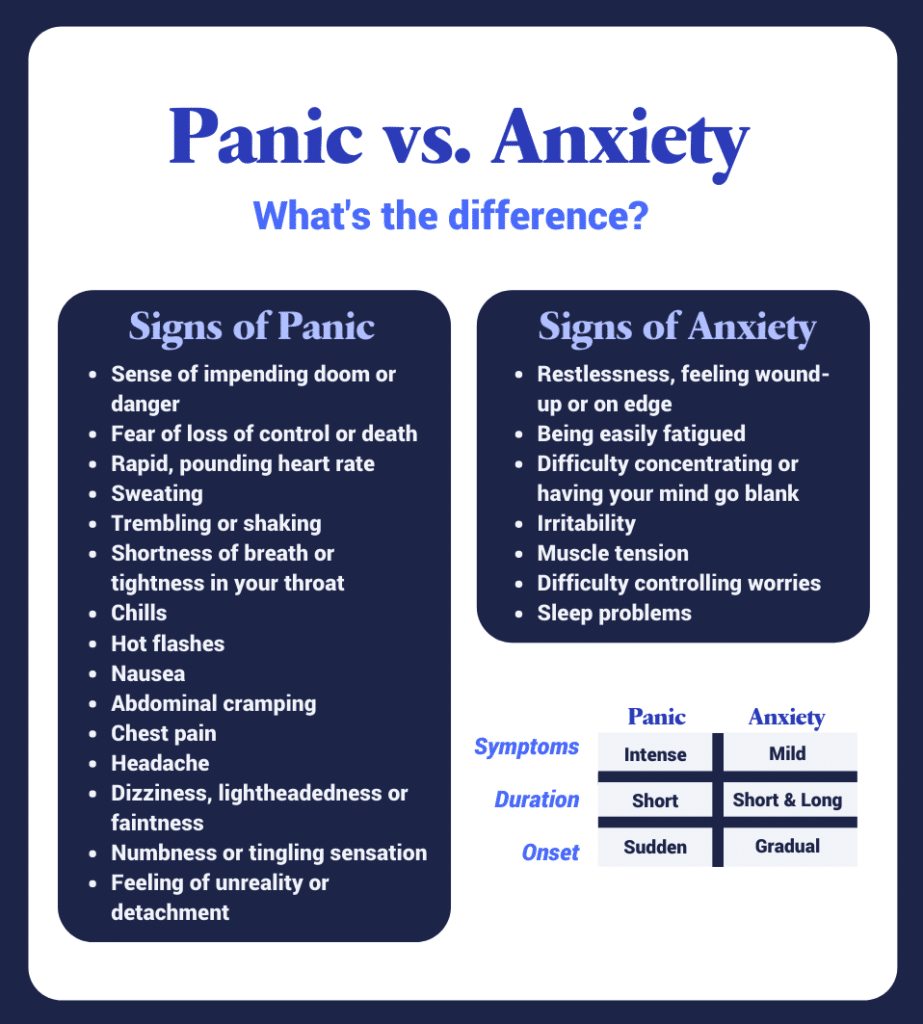
What is the difference between anxiety and panic attacks? There are clinical differences between these two disorders that the Diagnostic and Statistical Manual of Mental Disorders (5th edition) (DSM-5) identifies. We listed some of the most common below.
Appearance
One of the main differences between a panic attack vs. anxiety attack is how they appear. An anxiety attack will start out gradually, building up over time. But a panic attack is usually more spontaneous, sometimes going from 0 to 10 in an instant.
If someone isn’t familiar with panic attack symptoms, they might be challenging to recognize. In fact, many people think they’re experiencing a heart attack when a panic attack comes on.
Expert Insight

Licensed Clinical Social Worker-Supervisor (LCSW-S), CIMHP, EMDRCynthia Catchings
Onset
The onset of both conditions can be a determining factor on which you might be experiencing.
As noted,intenseanxietyattacks are slow to come on, and most people have multiple additional anxiety symptoms before any actual attack begins. There is also typically a specific cause or situation that sparks an anxiety attack.
Panic attacks will appear more spontaneously and suddenly. There often won’t be a slow build-up that results in the attack. Instead, they seem to come out of nowhere, so it can be difficult to pinpoint a specific cause. We should point out, despite the fact that this is how panic attacks present to most people, somestudiesshow there actually are some precursors, including significant changes in heart rate and respiratory functions.
Symptoms
There are several physical symptoms that are quite similar between the two conditions. But there are also some core differences. For example, levels of intensity can vary. And because chronic anxiety attacks usually result after a build-up, there are often more symptoms than a panic attack — which seemingly comes out of nowhere — may show.
Duration
A crucial distinction between anxiety and panic attacks lies in their duration, which influences how they are experienced and managed. This difference in timing sheds light on the unique nature of each condition, setting the stage for a deeper understanding of their individual characteristics.
Most panic attacks are brief, generally lasting between 5 to 20 minutes. In rare instances, they can stretch to an hour. The frequency of these attacks varies widely among individuals, from a few times a month to several times a week, depending on the severity of one’s condition.
Chronic anxiety attacks tend to last a lot longer, and because of the gradual onset of symptoms,and itcan feel like they’re going on forever.This extended duration and the slow build-up of anxiety highlight the pervasive nature of anxiety attacks, differentiating them from the acute, intense nature of panic attacks.
Triggers
Triggers are yet one more difference between frequent panic attacks and anxiety attacks. Triggers for anxiety attacks are most often situational. For example, if you have a fear of closed spaces, being trapped in a car wash or elevator may bring on an anxiety attack. Ultimately, anxiety attack triggers really just depend on what causes someone’s anxiety.
As a general rule, it’s difficult to say what might trigger a panic attack. The fact that they start so suddenly makes it difficult to say what causes them.
Online therapy for anxiety
What Are Anxiety Attacks?
The term anxiety attack is used to describe intense or extended periods of anxiety. An attack is more overwhelming and intense than just “having“ anxiety. But it’s not as severe as a panic attack. According to her book Stop Anxiety from Stopping You, Dr. Helen Odessky notes that the term anxiety attack became more common because people started feeling like anxiety was interrupting their life. As more and more clients began using it in in-person oronline therapy, mental health professionals began forming a more detailed definition.
Still, while the distinction between anxiety vs. panic attacks has become clearer over time, there isn’t yet an official definition for an anxiety attack.
Common Causes & Risk Factors
There isn’t one exact known cause of anxiety attacks. However, it is thought that a number of factors likely play a role in why someone might have an anxiety attack. These can include a response to a perceived threat, an anxiety disorder, or a response to a specific situation.
Perceived threats
Some people will experience anxiety as the result of an unknown threat. Think: walking alone on a dark street at night and feeling nervous or anxious. Having an anxiety attack in this situation would not be due to a specific danger, but rather the possibility of something bad happening. Although perceived threats can bring on an anxiety attack, they can actually also be a very normal, and sometimes even helpful, response to a potentially bad situation.
Anxiety disorders
Specific situations
Occasionally, someone may experience an anxiety attack from what begins as just a typical response to a stressful situation. The anxiety level may increase beyond just the “normal” reaction, resulting in an anxiety attack. Some of these instances could include:
Other risk factors
There are some additional risk factors that might come into play if you have severe anxiety attacks. Chronic stress ortraumatic eventscan result in frequent attacks. Genetics is another risk factor to be aware of. And, excessive substance abuse, caffeine consumption, or even certain medications can all bring onintenseanxietysymptomsas well.
What Does an Anxiety Attack Feel Like?There are both mental and physicalsymptomsto an anxiety attack.Mental symptomsMental symptoms of an anxiety attack can include:Excessive irritabilityApprehension or worryFinding it difficult to concentrateFearDistressA sense of uneasinessRestlessnessAnd more…Physical symptomsPhysical symptoms of an anxiety attack can include:Disturbed sleepExcessive fatigueFeeling tenseAn increased heart rateHeart palpitationsChest painDry mouthTightness in the throatSweatingIncreased startle responseDizzinessNumbness or tinglingShakingAnd more…Recognizing thesymptoms of anxietyis the first step in understanding your experiences and seeking appropriate help.
What Does an Anxiety Attack Feel Like?
There are both mental and physicalsymptomsto an anxiety attack.
Mental symptoms
Mental symptoms of an anxiety attack can include:
Physical symptoms
Physical symptoms of an anxiety attack can include:
Recognizing thesymptoms of anxietyis the first step in understanding your experiences and seeking appropriate help.
What is a Panic Attack?Panic attacks are easier to define because we have clinical consensus on the definition.Theofficial definition, according to the DSM is “A panic attack is a sudden episode of intense fear that triggers severe physical reactions when there is no real danger or apparent cause.”
What is a Panic Attack?
Panic attacks are easier to define because we have clinical consensus on the definition.
Theofficial definition, according to the DSM is “A panic attack is a sudden episode of intense fear that triggers severe physical reactions when there is no real danger or apparent cause.”
Panic disorder
Frequentpanic attackscan be a symptom ofpanic disorder. If you think you have apanic disorder, consider working with a mental health professional to alleviate some of the burdens. Our free onlinepanic disordertest can help you understand whether your experiences are indicative of the disorder so that you can seek treatment to manage symptoms.
Seeing atherapist, whether in-person, or online, can be a good way for you to learn how to process and manage your anxiety. Certain traumatic events can eventually cause panic disorder. Some people have developed it after witnessing sudden or graphic deaths. Witnessing an unexpected death can be so traumatic, it can make people feel like they might die in a moment, at any time, causing a panic attack.
Risk factors
Risk factors of panic attacks are very similar to those of anxiety attacks. They can include:
What Does a Panic Attack Feel Like?The main difference between a panic attack vs. anxiety attack can be seen when looking at the mental and physical symptoms of a panic attack.Mental panic attack symptomsMental symptoms of a panic attack can include:Excessive fearA sense of detachmentFear of dyingFear of losing controlAnd more…Physical panic attack symptomsPhysical symptoms of a panic attack are the same as what you may experience during an anxiety attack. They can include:Accelerated heart ratesHeart palpitationsShortness of breathChest painSweatingDry mouthShakingFeeling faint or dizzyTightness in the throatAnd more…
What Does a Panic Attack Feel Like?
The main difference between a panic attack vs. anxiety attack can be seen when looking at the mental and physical symptoms of a panic attack.
Mental panic attack symptoms
Mental symptoms of a panic attack can include:
Physical panic attack symptoms
Physical symptoms of a panic attack are the same as what you may experience during an anxiety attack. They can include:
How to Calm Anxiety or Panic Attacks
There are a number of ways you can face anxiety or panic attacks. There are many holistic things you can do to help calm yourself down, like simple lifestyle changes, for example. Experts have many other coping techniques they can share with you too.
Cynthia Catchings, LCSW-S, LCSW-C, CMHIMP, EMDR, has some great ideas.
For comprehensive strategies beyond these techniques, explore our guide onhow to deal with anxietyfor additional support.
Keep in mind that there is hope; amental healthprofessionalcan treat both issues. Remind yourself about this when you want to feel calm.
An anxiety or panic attack may also be treated withcognitive-behavioral therapy(CBT) and/oranti-anxiety medication. A panic attack can also be treated with CBT or with selective serotonin reuptake inhibitors (SSRIs) and othermedications to treat depression.
Staying informed and looking for help when you need it can create a sense of calmness and help you experience less anxiety or panic attacks in the future. You may get them, but knowing the differences between a panic attack vs. anxiety attack is the first step in being able to deal with them. You don’t have to let anxiety get the best of you — there is helpandtreatment optionsavailable.
Cynthia CatchingsCynthia Catchings is a trilingual licensed clinical social worker-supervisor, mental health consultant, professor, and trainer for federal law enforcement agencies. Cynthia has over 15 years of experience in the mental health profession. She is passionate about women’s mental health, life transitions, and stress management. Her clinical work, advocacy, and volunteer service have focused on working with domestic violence survivors and conducting mental health research in over 30 countries.
Cynthia Catchings is a trilingual licensed clinical social worker-supervisor, mental health consultant, professor, and trainer for federal law enforcement agencies. Cynthia has over 15 years of experience in the mental health profession. She is passionate about women’s mental health, life transitions, and stress management. Her clinical work, advocacy, and volunteer service have focused on working with domestic violence survivors and conducting mental health research in over 30 countries.
Share


Effective and affordable mental health treatmentGet Started
Effective and affordable mental health treatment

Related Articles About Anxiety DisorderView all articlesAnxiety DisorderDecember 4, 2024How to Overcome Anxiety About Your Cancer DiagnosisAnxiety DisorderOctober 23, 2024Nurse Anxiety: Overcoming Stress in a High-Pressure ProfessionAnxiety DisorderOctober 23, 2024Overcoming Anxiety in the MilitaryAnxiety DisorderSeptember 18, 2024Overcoming Parental Anxiety: Strategies for a Calmer MindAnxiety DisorderAugust 26, 202415 Effective Coping Skills for AnxietyAnxiety DisorderJuly 24, 2024Acupuncture for Anxiety: Does it Work?Anxiety DisorderJuly 24, 2024Does Alcohol Cause Anxiety? Exploring the ConnectionAnxiety Disorder, PhobiasJune 18, 2024Agoraphobia vs Social Anxiety Disorder: What’s the Difference?Anxiety DisorderJune 18, 202413 Best Jobs for People with Social AnxietyAnxiety DisorderJune 18, 2024Election Anxiety: How to Cope With Political Stress
Related Articles About Anxiety DisorderView all articles
Related Articles About Anxiety Disorder
Anxiety DisorderDecember 4, 2024How to Overcome Anxiety About Your Cancer DiagnosisAnxiety DisorderOctober 23, 2024Nurse Anxiety: Overcoming Stress in a High-Pressure ProfessionAnxiety DisorderOctober 23, 2024Overcoming Anxiety in the MilitaryAnxiety DisorderSeptember 18, 2024Overcoming Parental Anxiety: Strategies for a Calmer MindAnxiety DisorderAugust 26, 202415 Effective Coping Skills for AnxietyAnxiety DisorderJuly 24, 2024Acupuncture for Anxiety: Does it Work?Anxiety DisorderJuly 24, 2024Does Alcohol Cause Anxiety? Exploring the ConnectionAnxiety Disorder, PhobiasJune 18, 2024Agoraphobia vs Social Anxiety Disorder: What’s the Difference?Anxiety DisorderJune 18, 202413 Best Jobs for People with Social AnxietyAnxiety DisorderJune 18, 2024Election Anxiety: How to Cope With Political Stress
Anxiety DisorderDecember 4, 2024How to Overcome Anxiety About Your Cancer Diagnosis

Anxiety DisorderOctober 23, 2024Nurse Anxiety: Overcoming Stress in a High-Pressure Profession
Anxiety DisorderOctober 23, 2024Overcoming Anxiety in the Military
Anxiety DisorderSeptember 18, 2024Overcoming Parental Anxiety: Strategies for a Calmer Mind
Anxiety DisorderAugust 26, 202415 Effective Coping Skills for Anxiety
Anxiety DisorderJuly 24, 2024Acupuncture for Anxiety: Does it Work?
Anxiety DisorderJuly 24, 2024Does Alcohol Cause Anxiety? Exploring the Connection
Anxiety Disorder, PhobiasJune 18, 2024Agoraphobia vs Social Anxiety Disorder: What’s the Difference?
Anxiety DisorderJune 18, 202413 Best Jobs for People with Social Anxiety
Anxiety DisorderJune 18, 2024Election Anxiety: How to Cope With Political Stress

If you are in a life threatening situation – don’t use this site. Call 988 or useto get immediate help.
Therapy may be free for you
