On This Page:ToggleTypes of Sports PsychologistsCommonly Used TechniquesHow to Become a Sports PsychologistFrequently Asked Questions
On This Page:Toggle
On This Page:
Sports psychology is the study of psychological factors that influence athletic performance and how participation in sports and exercise can affect the psychological and physical well-being of athletes.Imagery involves creating or recreating a vivid experience in the mind, encompassing all senses such as sight, sound, touch, taste, and smell. This can involve imagining executing a perfect jump in gymnastics, scoring a goal in soccer, or visualizing the route of a marathon race.
Sports psychology is the study of psychological factors that influence athletic performance and how participation in sports and exercise can affect the psychological and physical well-being of athletes.
Imagery involves creating or recreating a vivid experience in the mind, encompassing all senses such as sight, sound, touch, taste, and smell. This can involve imagining executing a perfect jump in gymnastics, scoring a goal in soccer, or visualizing the route of a marathon race.
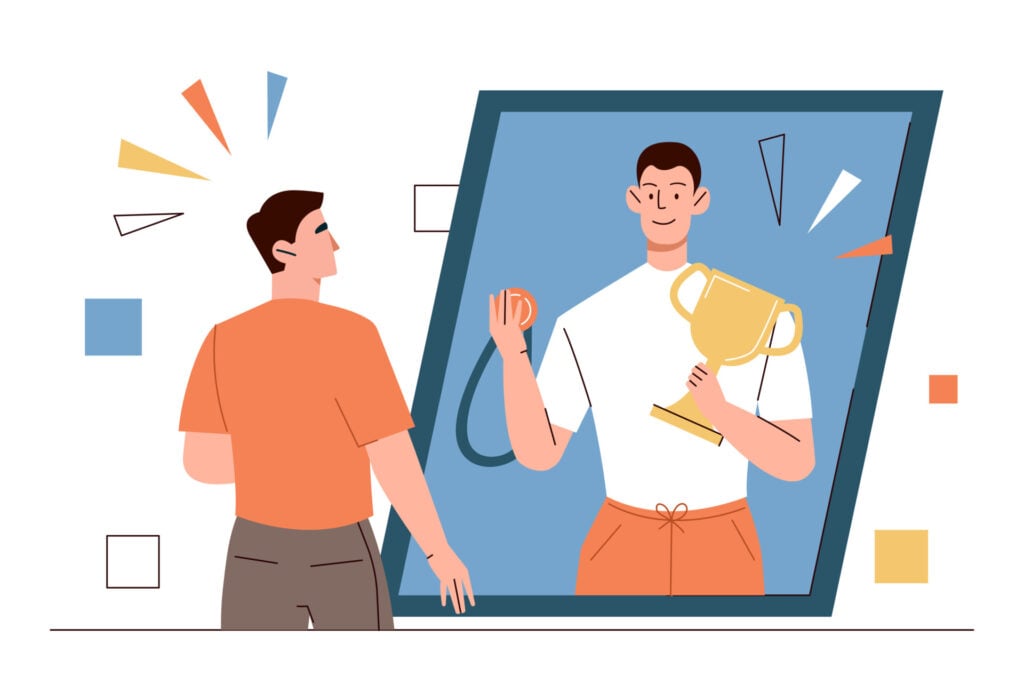
Researchers in this field explore how psychology can be used to optimize athletic performance and how exercise can be utilized to improve mood and lower stress levels.
Sports psychologists teach cognitive and behavioral strategies to help athletes improve their experiences, athletic performance, and mental wellness when participating in sports.
They can assist with performance enhancement, motivation, stress management, anxiety control, or mental toughness. They also can help with injury rehabilitation, team building, burnout, or career transitioning.
Sports psychologists don”t just work with athletes. They can work with coaches, parents, administrators, fitness professionals, performers, organizations, or everyday exercises to demonstrate how we can utilize exercise, sport, and athletics to enhance our lives and psychological development.
Types of Sports Psychologists
Educational Sports Psychologists
An educational sports psychologist educates clients on how to utilize psychological skills effectively to enhance sports performance and manage the mental factors of sports.
These skills could include goal setting, imagery, self-talk, or energy management (discussed in more detail below).
Clinical Sports Psychologists
Clinical sports psychologists work with athletes who have mental health issues such as depression, anxiety, eating disorders, or substance abuse.
They utilize strategies from both sports psychology and psychotherapy, helping athletes improve their mental health and sports performance concurrently. Being a clinical psychologist requires a doctoral degree in clinical or counseling psychology.
Commonly Used Techniques
Arousal Regulation
Goal Setting
Imagery
Pre-Performance Routines
Self-Talk
Progressive Muscle Relaxation
Hypnosis
Hypnosis involves being in a state of increased attention, concentration, and suggestibility. Sports psychologists sometimes use this strategy to help clients control state anxiety and arousal levels. Most typically, though, it is used among health psychologists to help patients quit smoking.
Cognitive Behavioral Therapy (CBT)
Biofeedback
How to Become a Sports Psychologist
Most positions in this field require a master’s or doctoral degree in clinical, counseling, or sport psychology. You are also required to take classes in kinesiology, physiology, sports medicine, business and marketing.
Then, you must practice directly under a licensed psychologist for at least two years. In order to obtain a professional board certification from
The American Board of Sport Psychology, you must pass a qualifying exam. Board certification is not required for a state license, but many employers prefer or require it.
Specialties within this field could include applied sport psychology, clinical sport psychology, or academic sport psychology.
The salaries for sports psychologists vary depending on whether you are in private practice or work within a team or organization.
The American Psychological Association (APA) reports that sport and performance psychologists in university athletic departments can earn $60,000 to $80,000 a year, while salaries working in a private practice can exceed $100,000 annually.
Frequently Asked Questions
Can sports psychologists prescribe medications?A sports psychologist cannot prescribe medication unless they have a medical degree. If a sports psychologist has this degree, then they are usually referred to as a sports psychiatrist.Sports psychiatrists are medical doctors who serve a similar role as sports psychologists, but they focus more on psychopathology and mental disorders in athletes.What jobs can I get with a sports psychology degree?In addition to being a licensed clinical sport psychologist, you could also be a mental performance consultant, a personal trainer, a sports coach, a research specialist, a sports psychology professor, or a physical therapist, to name a few.Why is sports psychology important?Mental health and overall well-being are fundamental to athletic competition and performance.Seeking the support of a sports psychologist can help athletes achieve their overall performance improvement goals.Sports psychologists can help better one’s attitude, focus, confidence, and mental game, empowering athletes to stay engaged in the sports they love.How does sports psychology help athletes?Sports psychology can help athletes and non-athletes cope with the pressures of competition, enhance athletic performance, and achieve their goals.Mental training alongside physical training is more profitable than physical training alone.Athletes can learn to overcome pressures associated with sporting performance and develop more focus, commitment, and enjoyment.Where can you study sports psychology?There are both undergraduate and graduate degrees available in sports psychology.Several colleges and universities offer undergraduate bachelor’s degrees and/or master’s and doctoral degrees in clinical, counseling, or sport psychology.Depending on the institution, you might also be able to study sports psychology online.How can sports psychology improve performance?Sports psychology can improve performance in several ways – reducing anxiety, enhancing focus, improving mental toughness, developing confidence, adopting a healthy level of motivation, or uncovering obstacles that might be limiting an athlete’s performance.
Can sports psychologists prescribe medications?A sports psychologist cannot prescribe medication unless they have a medical degree. If a sports psychologist has this degree, then they are usually referred to as a sports psychiatrist.Sports psychiatrists are medical doctors who serve a similar role as sports psychologists, but they focus more on psychopathology and mental disorders in athletes.
Can sports psychologists prescribe medications?
A sports psychologist cannot prescribe medication unless they have a medical degree. If a sports psychologist has this degree, then they are usually referred to as a sports psychiatrist.Sports psychiatrists are medical doctors who serve a similar role as sports psychologists, but they focus more on psychopathology and mental disorders in athletes.
What jobs can I get with a sports psychology degree?In addition to being a licensed clinical sport psychologist, you could also be a mental performance consultant, a personal trainer, a sports coach, a research specialist, a sports psychology professor, or a physical therapist, to name a few.
What jobs can I get with a sports psychology degree?
In addition to being a licensed clinical sport psychologist, you could also be a mental performance consultant, a personal trainer, a sports coach, a research specialist, a sports psychology professor, or a physical therapist, to name a few.
Why is sports psychology important?Mental health and overall well-being are fundamental to athletic competition and performance.Seeking the support of a sports psychologist can help athletes achieve their overall performance improvement goals.Sports psychologists can help better one’s attitude, focus, confidence, and mental game, empowering athletes to stay engaged in the sports they love.
Why is sports psychology important?
Mental health and overall well-being are fundamental to athletic competition and performance.Seeking the support of a sports psychologist can help athletes achieve their overall performance improvement goals.Sports psychologists can help better one’s attitude, focus, confidence, and mental game, empowering athletes to stay engaged in the sports they love.
Mental health and overall well-being are fundamental to athletic competition and performance.
Seeking the support of a sports psychologist can help athletes achieve their overall performance improvement goals.
Sports psychologists can help better one’s attitude, focus, confidence, and mental game, empowering athletes to stay engaged in the sports they love.
How does sports psychology help athletes?Sports psychology can help athletes and non-athletes cope with the pressures of competition, enhance athletic performance, and achieve their goals.Mental training alongside physical training is more profitable than physical training alone.Athletes can learn to overcome pressures associated with sporting performance and develop more focus, commitment, and enjoyment.
How does sports psychology help athletes?
Sports psychology can help athletes and non-athletes cope with the pressures of competition, enhance athletic performance, and achieve their goals.Mental training alongside physical training is more profitable than physical training alone.Athletes can learn to overcome pressures associated with sporting performance and develop more focus, commitment, and enjoyment.
Sports psychology can help athletes and non-athletes cope with the pressures of competition, enhance athletic performance, and achieve their goals.
Mental training alongside physical training is more profitable than physical training alone.Athletes can learn to overcome pressures associated with sporting performance and develop more focus, commitment, and enjoyment.
Where can you study sports psychology?There are both undergraduate and graduate degrees available in sports psychology.Several colleges and universities offer undergraduate bachelor’s degrees and/or master’s and doctoral degrees in clinical, counseling, or sport psychology.Depending on the institution, you might also be able to study sports psychology online.
Where can you study sports psychology?
There are both undergraduate and graduate degrees available in sports psychology.Several colleges and universities offer undergraduate bachelor’s degrees and/or master’s and doctoral degrees in clinical, counseling, or sport psychology.Depending on the institution, you might also be able to study sports psychology online.
There are both undergraduate and graduate degrees available in sports psychology.Several colleges and universities offer undergraduate bachelor’s degrees and/or master’s and doctoral degrees in clinical, counseling, or sport psychology.
Depending on the institution, you might also be able to study sports psychology online.
How can sports psychology improve performance?Sports psychology can improve performance in several ways – reducing anxiety, enhancing focus, improving mental toughness, developing confidence, adopting a healthy level of motivation, or uncovering obstacles that might be limiting an athlete’s performance.
How can sports psychology improve performance?
Sports psychology can improve performance in several ways – reducing anxiety, enhancing focus, improving mental toughness, developing confidence, adopting a healthy level of motivation, or uncovering obstacles that might be limiting an athlete’s performance.
Sources
American Psychological Association. (2014). Pursuing a career in sport and performance psychology. American Psychological Association. Retrieved from https://www.apa.org/educationcareer/guide/subfields/performance/education-training
Audette, J., & Bailey, A.M. (2007). CHAPTER 23 – Complementary and Alternative Medicine and the Athlete.
Cherry, K. (2022, February 14). An overview of sports psychology. Verywell Mind. Retrieved from https://www.verywellmind.com/what-is-sports-psychology-2794906#toc-what-is-sports-psychology
Psychology.org Staff. (2022, February 16). How to become a sports psychologist. Psychology.org | Psychology’s Comprehensive Online Resource. Retrieved from https://www.psychology.org/careers/sports-psychologist/
Sports psychology: Mindset can make or break an athlete. Oklahoma Wesleyan University. (2018, July 5). Retrieved from https://www.okwu.edu/news/2018/07/sports-psychology-make-or-break/

Saul McLeod, PhD
BSc (Hons) Psychology, MRes, PhD, University of Manchester
Saul McLeod, PhD., is a qualified psychology teacher with over 18 years of experience in further and higher education. He has been published in peer-reviewed journals, including the Journal of Clinical Psychology.
Julia Simkus
BA (Hons) Psychology, Princeton University
Julia Simkus is a graduate of Princeton University with a Bachelor of Arts in Psychology. She is currently studying for a Master’s Degree in Counseling for Mental Health and Wellness in September 2023. Julia’s research has been published in peer reviewed journals.
