On This Page:ToggleLocationStructureFunctionWhite Matter vs. Grey MatterDisordersImproving
On This Page:Toggle
On This Page:
The central nervous system (CNS) is composed ofwhite matterand grey matter. Grey matter, which makes up about half of the brain, consists primarily of neuronal cell bodies, dendrites, and unmyelinated axons.
Located primarily in the outer layers of the brain, grey matter is responsible for processing information, controlling muscle movement, and regulating sensory perception.

Where is grey matter found?
Its greyish-pink appearance comes from the high concentration of neuronal cell bodies it contains.
Grey matter is found in several key areas of the central nervous system:
This distribution allows grey matter to effectively process and integrate information throughout the central nervous system, facilitating various cognitive functions, sensory processing, and motor control.
What Grey Matter Consists Of
Grey matter is a complex tissue composed of various cellular structures:

Grey matter is particularly abundant in the cerebral cortex, which forms the outer layer of the cerebrum.
Interestingly, the cerebellum, despite making up only 10% of the brain’s volume, contains more neuronal cell bodies than the rest of the brain combined.
This high density of neurons contributes to the cerebellum’s crucial role in motor control, balance, and coordination.
In the spinal cord, grey matter is arranged in a butterfly-shaped pattern when viewed in cross-section. It’s divided into three main regions:
This unique composition and distribution of grey matter throughout the central nervous system enable it to perform its vital functions in information processing, sensory perception, and motor control.
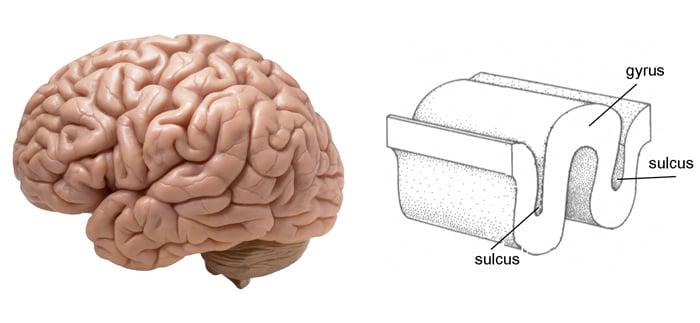
Function
Grey matter serves to process information in the brain. The structures within the grey matter process signals from the sensory organs or from other areas of the grey matter.
This tissue directs sensory stimuli to the neurons in the central nervous system where synapses induce a response to the stimuli.
These signals reach the grey matter through the myelinated axons that make up the bulk of the white matter.
The grey matter that surrounds the cerebrum, also given the name cerebral cortex, is involved in several functions such as being involved in personality, intelligence, motor function, planning, organization, language processing, and processing sensory information.
The cerebral cortex is divided into four lobes based on the gyri and sulci, which help mark these lobes:
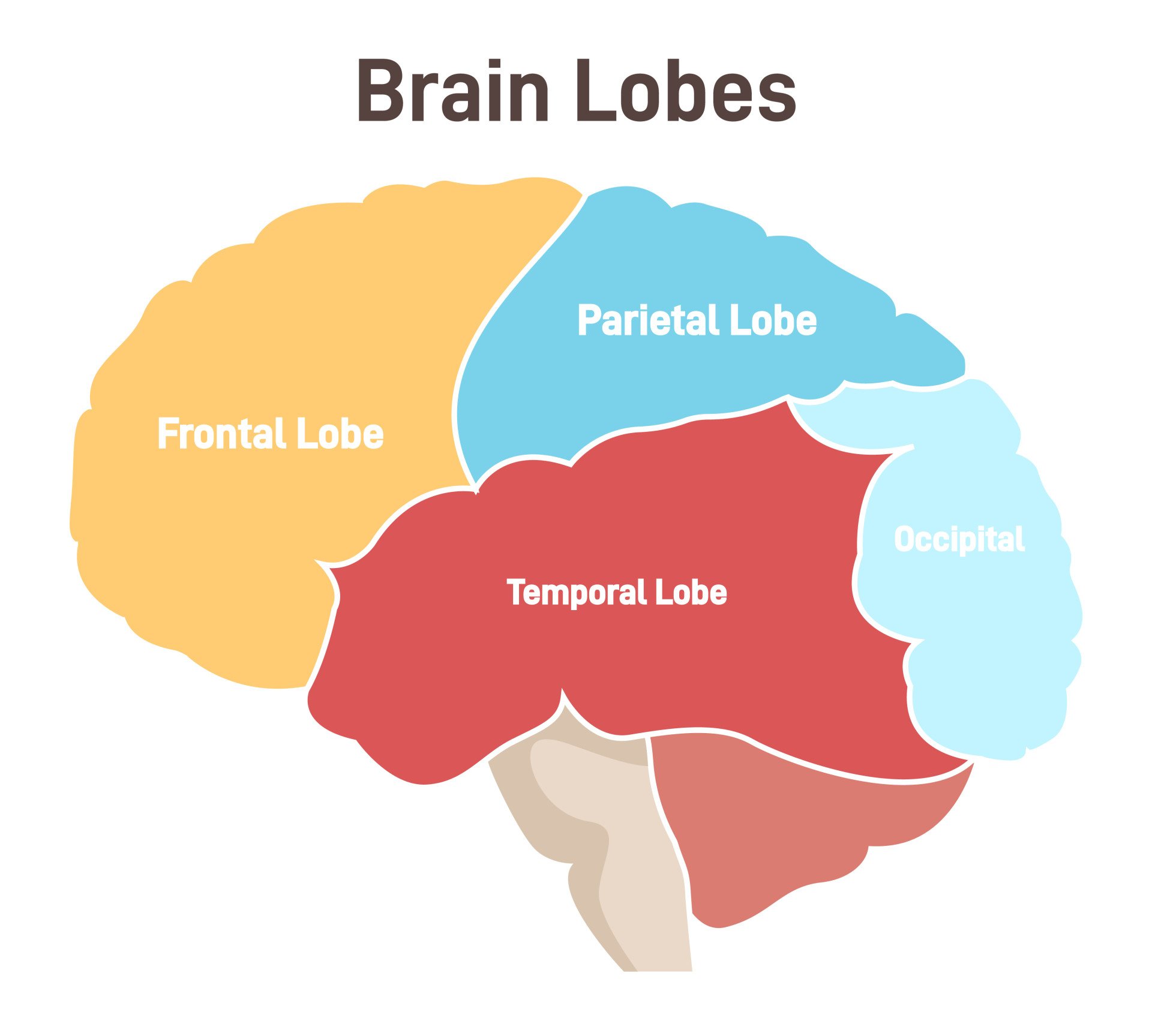
Within these lobes are also specific sensory and motor areas. These can include:
The grey matter in the cerebellum is related to motor control, balance, coordination, and automatic movements.
The three sections of grey matter in the spinal cord also serve their functions:
This means it helps to stimulate the body’s involuntary responses to stressful situations, such as accelerating heart rate and sending extra blood to the muscles.
White Matter vs. Grey Matter
Below are some of the key differences between white matter and grey matter:
White MatterGrey MatterWhite in colorGrey in colourLocated deep in the brain; outer portion of the spinal cordLocated in outer layer of brain (cortex); central portion of spinal cordComposed mainly of myelinated axons and oligodendrocytesComposed mainly of neuron cell bodies, dendrites, and unmyelinated axonsPrimary function is to transmit signals between different brain regionsPrimary function is to process and analyze informationFast signal transmissionSlower signal transmissionShows structural changes with learning and experienceUndergoes pruning and reorganization during developmentAppears bright on T1-weighted MRI imagesAppears dark on T1-weighted MRI images
Grey Matter Disorders
As grey matter covers many areas of the central nervous system and is the outermost layer of the brain specifically, this makes it susceptible to being damaged.
One of the most prevalent medical problems involving grey matter occurs when there is a plaque build-up in one or more areas of the grey matter in the brain.
This plaque takes up the space that would have been where there was once grey matter, meaning there would be a decrease in higher functioning as a result.
If the plaque continues to grow, this can cause a significant decline in cognitive functions and a loss of memory, known as Alzheimer’s disease. Aside from a loss in cognitive functioning, grey matter decline can lead to motor function issues such as losing control of fine motor skills.
The decrease in motor function could contribute to the uncontrollable shaking that is a symptom of Parkinson’s Disease. These diseases that cause a loss of neurons that make up the grey matter are called neurodegenerative diseases.
Trauma to the central nervous system could also play a role in creating issues that stem from grey matter.
As the cells in the grey matter require a constant high stream of oxygen to function normally, any trauma, such as falling and hitting the head at force, could cut off this supply of oxygen.
If there is no oxygen reaching the grey matter, this can cause the cells to die and result in irreversible brain damage and loss of function.
Damage to the grey matter of the cerebellum could result in coordination difficulties, issues with balance, and being unable to perform voluntary movements smoothly.
Damage to the cerebral cortex, in general, can result in a variety of symptoms depending on the area in which damage occurs:
How to Strengthen Grey Matter
For those who have experienced damage to their grey matter, perhaps from trauma, young infants and children often have better outcomes than adults.
This is because their neural systems are still developing and are more adaptable than adults.
Although there may not be any proven treatments for grey matter diseases such as Alzheimer’s and Parkinson’s disease, there are some lifestyle changes that could be adopted to help keep grey matter strengthened and potentially lower the risk of developing neurodegenerative diseases:
Interestingly, there has been a growing number of studies that suggest that electroconvulsive therapy (ECT) may stimulate neuroplastic effects on grey matter.
This could be a possible treatment in the future for those who have suffered loss or degeneration of grey matter, but it requires further research.
ReferencesBailey, R. (2020, February 5). What Does the Brain’s Cerebral Cortex Do? ThoughtCo. https://www.thoughtco.com/anatomy-of-the-brain-cerebral-cortex-373217Camilleri, J. A., Hoffstaedter, F., Zavorotny, M., Zöllner, R., Wolf, R. C., Thomann, P., Redlich, R., Opel, N., Dannlowski, U., Grozinger, M., Demirakca, T., Sartorius, A., Eickhoff, S. B. & Nickl-Jockschat, T. (2020). Electroconvulsive therapy modulates grey matter increase in a hub of an affect processing network.NeuroImage: Clinical, 25, 102114.Hydrocephalus Association. (2015, January 29). What’s the Matter? https://www.hydroassoc.org/whats-the-matter/Mercadante, A. A., & Tadi, P. (2020). Neuroanatomy, Gray Matter.Robertson, Sally. (2018, August 23). What is Grey Matter?. News-Medical. Retrieved on September 01, 2021 from https://www.news-medical.net/health/What-is-Grey-Matter.aspx.Schmahmann, J. D., & Pandya, D. N. (2007). Cerebral white matter—historical evolution of facts and notions concerning the organization of the fiber pathways of the brain. Journal of the History of the Neurosciences, 16(3), 237-267.
References
Bailey, R. (2020, February 5). What Does the Brain’s Cerebral Cortex Do? ThoughtCo. https://www.thoughtco.com/anatomy-of-the-brain-cerebral-cortex-373217
Camilleri, J. A., Hoffstaedter, F., Zavorotny, M., Zöllner, R., Wolf, R. C., Thomann, P., Redlich, R., Opel, N., Dannlowski, U., Grozinger, M., Demirakca, T., Sartorius, A., Eickhoff, S. B. & Nickl-Jockschat, T. (2020). Electroconvulsive therapy modulates grey matter increase in a hub of an affect processing network.NeuroImage: Clinical, 25, 102114.
Hydrocephalus Association. (2015, January 29). What’s the Matter? https://www.hydroassoc.org/whats-the-matter/
Mercadante, A. A., & Tadi, P. (2020). Neuroanatomy, Gray Matter.
Robertson, Sally. (2018, August 23). What is Grey Matter?. News-Medical. Retrieved on September 01, 2021 from https://www.news-medical.net/health/What-is-Grey-Matter.aspx.
Schmahmann, J. D., & Pandya, D. N. (2007). Cerebral white matter—historical evolution of facts and notions concerning the organization of the fiber pathways of the brain. Journal of the History of the Neurosciences, 16(3), 237-267.

Saul McLeod, PhD
BSc (Hons) Psychology, MRes, PhD, University of Manchester
Saul McLeod, PhD., is a qualified psychology teacher with over 18 years of experience in further and higher education. He has been published in peer-reviewed journals, including the Journal of Clinical Psychology.
Olivia Guy-Evans, MSc
BSc (Hons) Psychology, MSc Psychology of Education
Olivia Guy-Evans is a writer and associate editor for Simply Psychology. She has previously worked in healthcare and educational sectors.
