On This Page:ToggleSynaptic TransmissionHow Neurons Sum Up SignalsPostsynaptic PotentialsNeurotransmitter ReuptakeSynaptic Plasticity
On This Page:Toggle
On This Page:
A synapse is the junction wheretwo neurons communicate without physically touching.
It consists of:
Chemical messengers calledneurotransmittersbridge this gap to transmit signals between neurons.
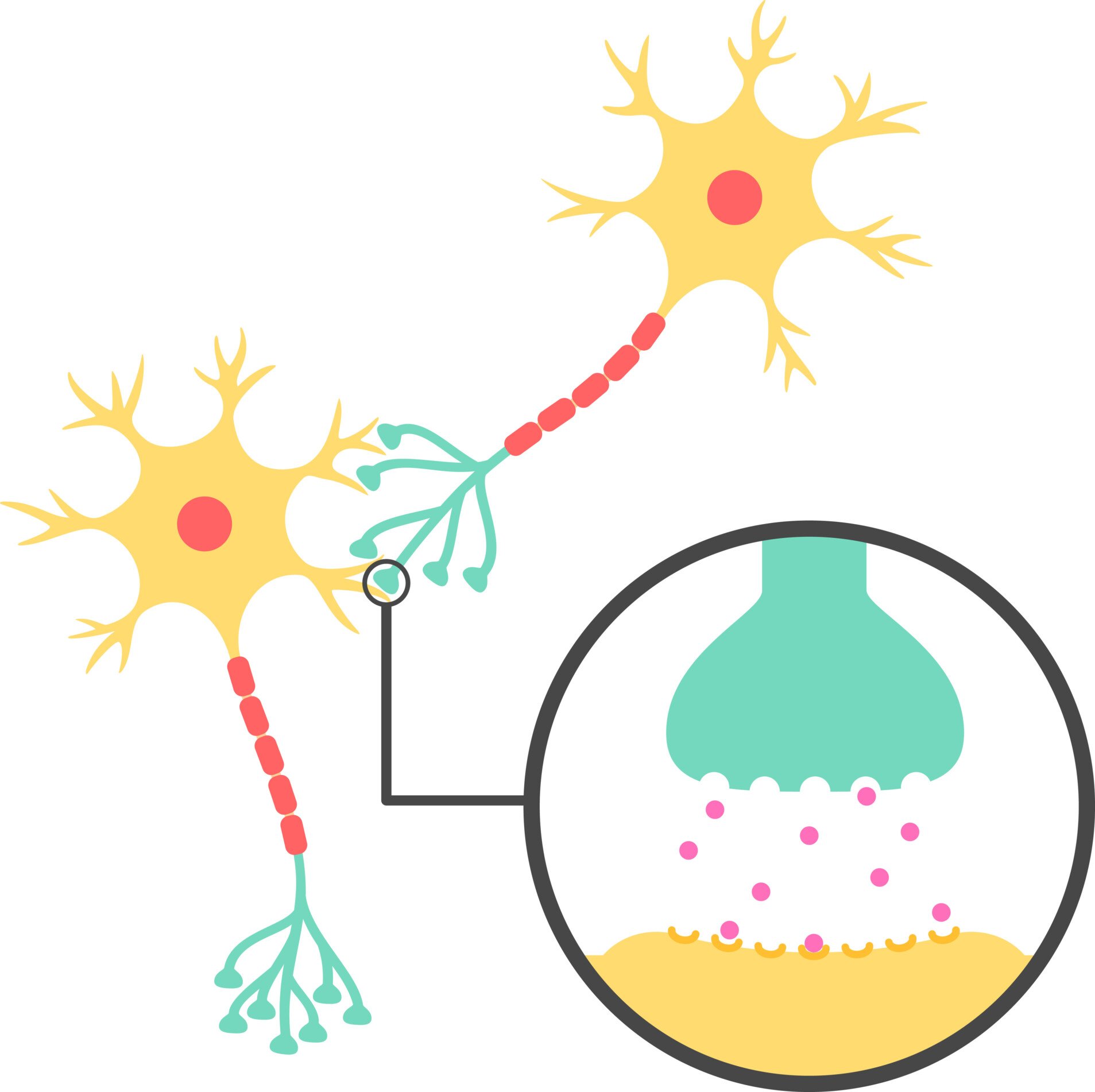
Terminal buttonsat the ends of neurons contain vesicles filled withneurotransmitters.
When an electrical signal (action potential) reaches these terminals, it triggers the release of these chemical messengers.
The neurotransmitters cross thesynaptic cleftand bind to receptors on the receiving neuron.
Importantly, neurons can receive signals from many terminal buttons, and each neuron’s terminals can form synapses with multiple other neurons, creating complex communication networks.

Synaptic Transmission
Synapses are essential for systemic neural activity. Neuroscientists understand that synapses play a vital role in a variety of cognitive functions, includinglearning and memory formation.
Chemical SynapsesElectrical SynapsesGap between cells is about 20 nanometresGap between cells is about 3.5 nanometresSpeed of transmission is several millisecondsSpeed of transmission is nearly instantaneousCan be excitatory or inhibitoryCan be excitatory or inhibitoryNo loss of signal strengthSignal strength diminishes over time and space
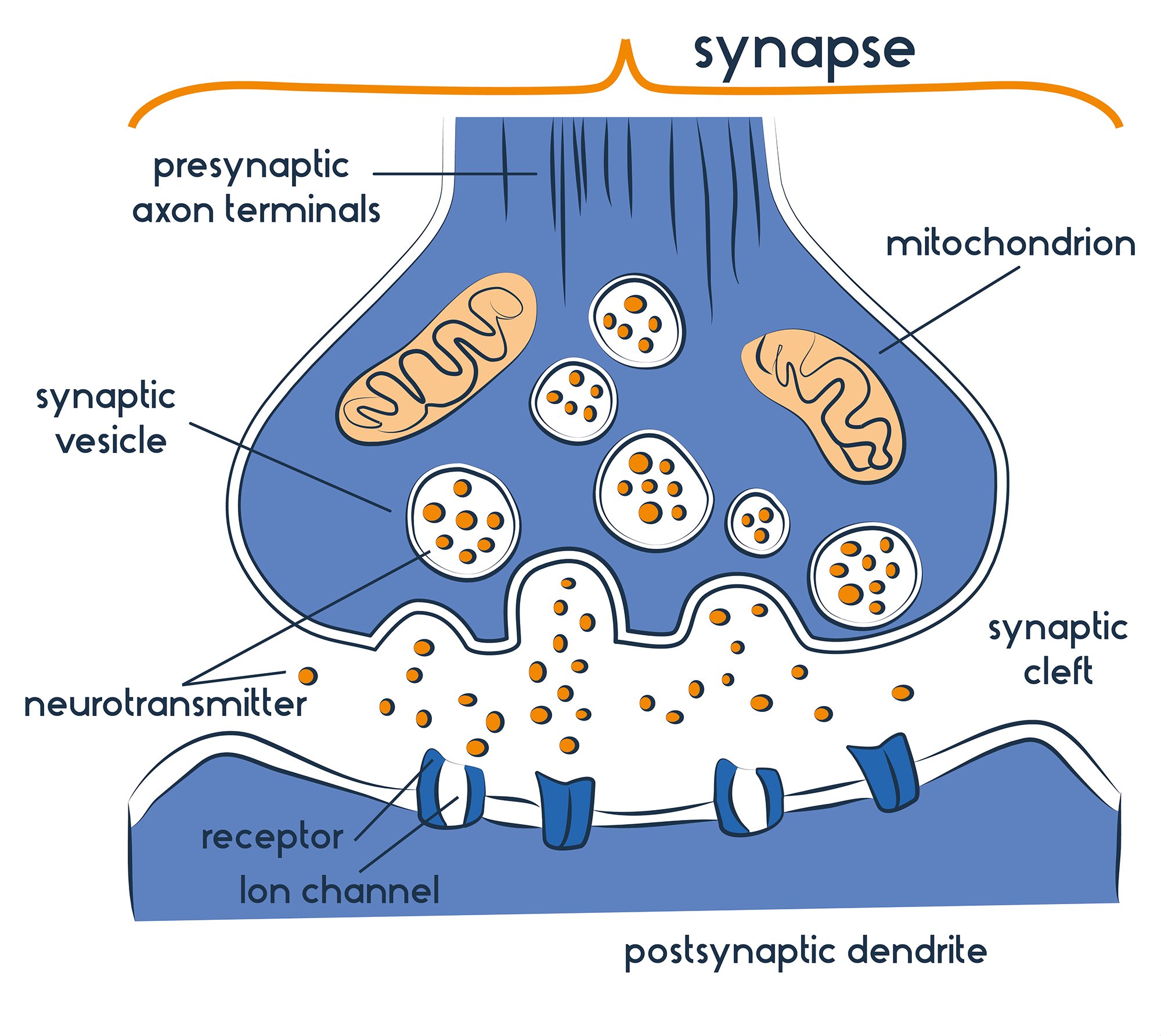
Chemical synaptic transmission
In chemical synapses, information flows through neurotransmitters in four steps:
An electrical signal reaches the sending neuron’s terminal
This triggers release of neurotransmitter chemicals
These chemicals cross the synaptic gap and bind to receptors on the receiving neuron
The receiving neuron converts this chemical signal back to electrical
The effect can be eitherexcitatory(triggering the next neuron to fire) orinhibitory(preventing it from firing).
Common excitatory neurotransmitters include noradrenaline, whileserotonincan have inhibitory effects.
Understanding calcium’s role helps explain:
How some neurological conditions affect synaptic transmission
How certain medications affect neuron communication
Why calcium levels in the brain are carefully regulated

Electrical synaptic transmission
Electrical synapses use direct connections calledgap junctions– protein channels that connect two neurons.
This allows electrical signals to flow directly between cells, making transmission nearly instantaneous.
While faster than chemical synapses, these connections can only excite (not inhibit) the next neuron, and their signals weaken over distance.
The synaptic cleft is the small gap between neurons at a synapse. Its primary function is to allow for the transmission of chemical signals, in the form of neurotransmitters, from the axon terminal of one neuron to the dendrite or cell body of another. This transfer of neurotransmitters facilitates communication between neurons, enabling various brain and body functions.

How Neurons Sum Up Signals
Neurons receive multiple signals and must “decide” whether to fire based on their combined effect. This process, calledsummation, happens in two ways:
This summation process lets neurons act as sophisticated signal processors, responding to both the timing and location of incoming signals.
Excitatory and Inhibitory Postsynaptic Potentials
The effect of the presynaptic neuron on the postsynaptic neuron can be eitherexcitatory or inhibitory.
Chemicals released from the presynaptic neuron may either excite or inhibit the postsynaptic neuron, telling it to release neurotransmitters or to slow down or stop signaling.
Inhibitory neurotransmittersdecrease the likelihood of the neuron firing. They are generally responsible for calming the mind and inducing sleep. This is the case forserotonin.
Excitatory neurotransmittersincrease the likelihood that an excitatory signal is sent to the post-synaptic cell.Adrenalinwhich is both a neurotransmitter and a hormone has an excitatory effect.
When the axon fires and the terminal buttons release a neurotransmitter that excites the postsynaptic neuron, this is excitatory postsynaptic potential(EPSP).This effect of excitation makes it more likely that the axons of the postsynaptic neuron will also fire.
An EPSP isdepolarizing, meaning it makes the inside of the neuron more positive, which causes more action potential.
IPSPs, however, bring the potential down, meaning they will be less likely to cause action potential and can cancel out the excitatory effect of the EPSPs.
Reuptake of Neurotransmitters
For a synapse to function effectively, it must be shut off once the signal is sent. Thissignal terminationallows the postsynaptic neuron to return to its resting potential state, ready for new signals.
When neurotransmitters get released into the synaptic cleft, not all of them can attach to the receptors of the next neuron.

Re-uptake is when neurotransmitters get reabsorbed back into the presynaptic neuron from which they came from.
Transporter proteinsfrom the presynaptic membrane remove the neurotransmitters from the synaptic cleft, carrying the neurotransmitter back into the presynaptic neuron.
The neurotransmitter then either gets re-packaged into the synaptic vesicles and stored until it is next needed again, or enzymes break them down.
Serotoninis a type of neurotransmitter that is associated with a variety of psychological and bodily functions, such as mood, sexual desire, appetite, sleep, and memory.
If there are imbalances in the way serotonin is transmitted between neurons through too much reuptake of this neurotransmitter, then this has implications for contributing tomood disorders,specifically depression.
Selective serotonin reuptake inhibitors (SSRIs) are a type of medication, also known asantidepressants, that work in a way to increase the amount of serotonin being transmitted between cells.
SSRIs essentially aid in blocking the reuptake of serotonin into the presynaptic cell, meaning there is more serotonin in the synaptic cleft.
If there is more serotonin in the synaptic cleft, it is more likely that serotonin will reach the receptors of the postsynaptic cell.
As SSRIs allow more serotonin to pass along between neurons, they have been shown to alleviate mood disorders, making them acommon therapy for depression.
Synaptic Plasticity
Plasticityrefers to how much something can be changed or adapted through growth and reorganization.
It was once believed that once synapses were formed, they remained the same forever, never changing.
However, it is now understood that activity, or lack of activity, can affect the strength of synapses or even change the number and structure of synapses in the brain.
Therefore, the more the synapses are used, the stronger they can become and the more influence they can have over postsynaptic neurons.
Likewise, not fully using synapses can weaken them and have a detrimental long-term impact.
Further Reading



Saul McLeod, PhD
BSc (Hons) Psychology, MRes, PhD, University of Manchester
Saul McLeod, PhD., is a qualified psychology teacher with over 18 years of experience in further and higher education. He has been published in peer-reviewed journals, including the Journal of Clinical Psychology.
Karina Ascunce GonzálezNeuroscience B.A. (Hons), Harvard UniversityPhD Neuroscience Student, Yale University
Karina Ascunce González
Neuroscience B.A. (Hons), Harvard University
PhD Neuroscience Student, Yale University
PhD Student at the Yale Biological & Biomedical Sciences' Interdepartmental Neuroscience Program interested in neurodegeneration, stem cell culture, and bioethics. AB in Neuroscience with a Secondary in Global Health & Health Policy from Harvard University. Karina has been published in peer reviewed journals.
Olivia Guy-Evans, MSc
BSc (Hons) Psychology, MSc Psychology of Education
Olivia Guy-Evans is a writer and associate editor for Simply Psychology. She has previously worked in healthcare and educational sectors.
