Research methods in psychology are systematic procedures used to observe, describe, predict, and explain behavior and mental processes. They include experiments, surveys, case studies, and naturalistic observations, ensuring data collection is objective and reliable to understand and explain psychological phenomena.

Hypotheses
There arefour types of hypotheses:
All research has an alternative hypothesis (either a one-tailed or two-tailed) and a corresponding null hypothesis.
Once the research is conducted and results are found, psychologists must accept one hypothesis and reject the other.
So, if a difference is found, the Psychologist would accept the alternative hypothesis and reject the null. The opposite applies if no difference is found.
Sampling techniques
Samplingis the process of selecting a representative group from the population under study.A sample is the participants you select from a target population (the group you are interested in) to make generalizations about.Representative means the extent to which a sample mirrors a researcher’s target population and reflects its characteristics.Generalisability means the extent to which their findings can be applied to the larger population of which their sample was a part.Volunteer sample: where participants pick themselves through newspaper adverts, noticeboards or online.Opportunity sampling: also known asconvenience sampling, uses people who are available at the time the study is carried out and willing to take part. It is based on convenience.Random sampling:when every person in the target population has an equal chance of being selected. An example of random sampling would be picking names out of a hat.Systematic sampling: when a system is used to select participants. Picking every Nth person from all possible participants. N = the number of people in the research population / the number of people needed for the sample.Stratified sampling:when you identify the subgroups and select participants in proportion to their occurrences.Snowball sampling:when researchers find a few participants, and then ask them to find participants themselves and so on.Quota sampling:when researchers will be told to ensure the sample fits certain quotas, for example they might be told to find 90 participants, with 30 of them being unemployed.
Samplingis the process of selecting a representative group from the population under study.
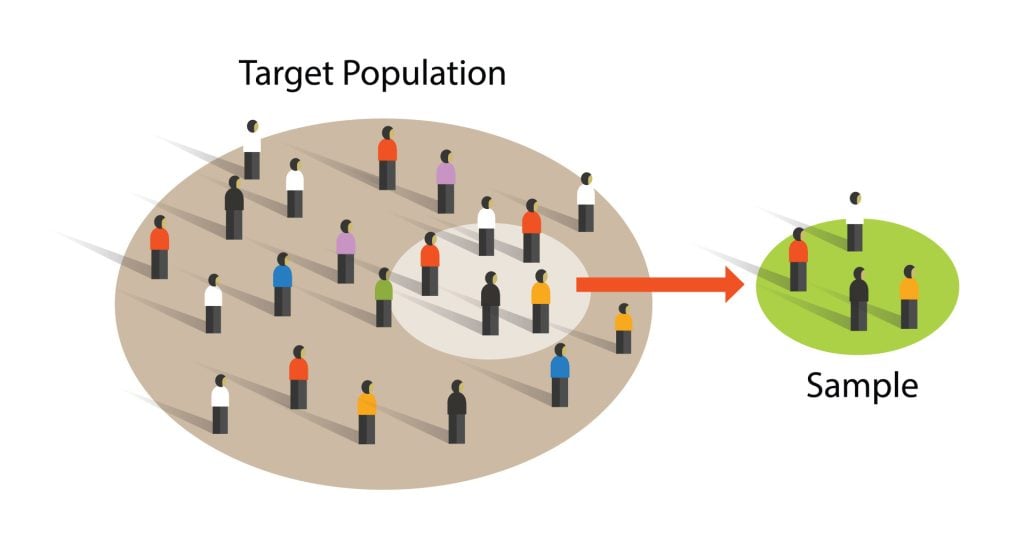
A sample is the participants you select from a target population (the group you are interested in) to make generalizations about.
Representative means the extent to which a sample mirrors a researcher’s target population and reflects its characteristics.
Generalisability means the extent to which their findings can be applied to the larger population of which their sample was a part.
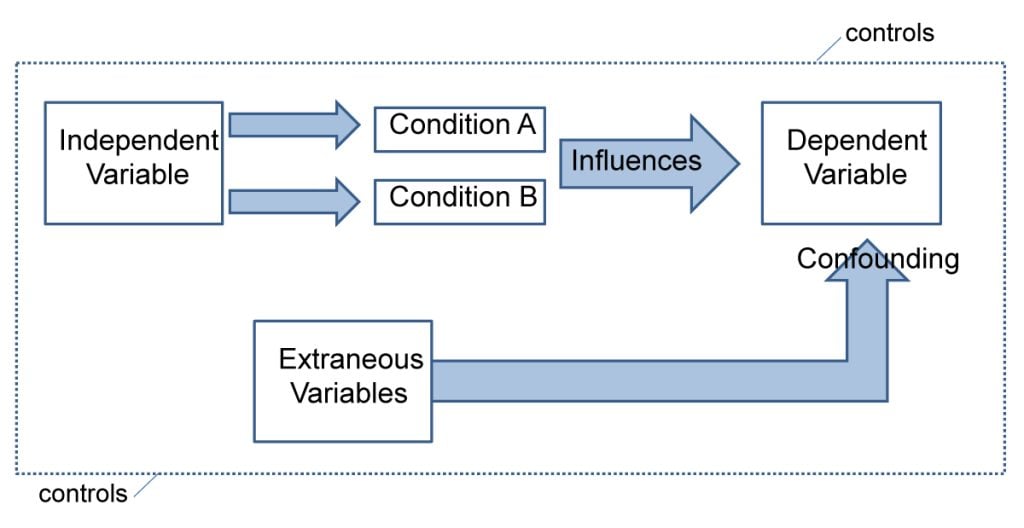
VariablesExperiments always have anindependent and dependent variable.Theindependent variableis the one the experimenter manipulates (the thing that changes between the conditions the participants are placed into). It is assumed to have a direct effect on the dependent variable.Thedependent variableis the thing being measured, or the results of the experiment.
Variables
Experiments always have anindependent and dependent variable.
Operationalization of variablesmeans making them measurable/quantifiable. We must use operationalization to ensure that variables are in a form that can be easily tested.
For instance, we can’t really measure ‘happiness’, but we can measure how many times a person smiles within a two-hour period.
By operationalizing variables, we make it easy for someone else to replicate our research. Remember, this is important because we can check if our findings are reliable.
Extraneous variablesare all variables which are not independent variable but could affect the results of the experiment.
It can be a natural characteristic of the participant, such as intelligence levels, gender, or age for example, or it could be a situational feature of the environment such as lighting or noise.
Demand characteristicsare a type of extraneous variable that occurs if the participants work out the aims of the research study, they may begin to behave in a certain way.
For example, inMilgram’s research, critics argued that participants worked out that the shocks were not real and they administered them as they thought this was what was required of them.
Extraneous variables must becontrolledso that they do not affect (confound) the results.
Randomly allocating participants to their conditions or using a matched pairs experimental design can help to reduce participant variables.
Experimental Design
Experimental designrefers to how participants are allocated to each condition of the independent variable, such as a control or experimental group.
If we wish to compare two groups with respect to a given independent variable, it is essential to make sure that the two groups do not differ in any other important way.
Experimental Methods
Allexperimental methodsinvolve an IV (independent variable) and DV (dependent variable).Lab Experimentsare conducted in a well-controlled environment, not necessarily a laboratory, and therefore accurate and objective measurements are possible.The researcher decides where the experiment will take place, at what time, with which participants, in what circumstances, using a standardized procedure.Field experimentsare conducted in the everyday (natural) environment of the participants.The experimenter still manipulates the IV, but in a real-life setting. It may be possible to control extraneous variables, though such control is more difficult than in a lab experiment.Natural experimentsare when a naturally occurring IV is investigated that isn’t deliberately manipulated, it exists anyway. Participants are not randomly allocated, and the natural event may only occur rarely.
The researcher decides where the experiment will take place, at what time, with which participants, in what circumstances, using a standardized procedure.
Case Study
Case studiesare in-depth investigations of a person, group, event, or community. It uses information from a range of sources, such as from the person concerned and also from their family and friends.
Many techniques may be used such as interviews, psychological tests, observations and experiments. Case studies are generally longitudinal: in other words, they follow the individual or group over an extended period of time.
Case studies provide rich qualitative data and have high levels of ecological validity. However, it is difficult to generalize from individual cases as each one has unique characteristics.
Correlational StudiesCorrelationmeans association; it is a measure of the extent to which two variables are related. One of the variables can be regarded as the predictor variable with the other one as the outcome variable.Correlational studies typically involve obtaining two different measures from a group of participants, and then assessing the degree of association between the measures.The predictor variable can be seen as occurring before the outcome variable in some sense. It is called the predictor variable, because it forms the basis for predicting the value of the outcome variable.Relationships between variables can be displayed on a graph or as a numerical score called a correlation coefficient.If an increase in one variable tends to be associated with an increase in the other, then this is known as apositive correlation.If an increase in one variable tends to be associated with a decrease in the other, then this is known as anegative correlation.Azero correlationoccurs when there is no relationship between variables.After looking at the scattergraph, if we want to be sure that a significant relationship does exist between the two variables, a statistical test of correlation can be conducted, such as Spearman’s rho.The test will give us a score, called acorrelation coefficient. This is a value between 0 and 1, and the closer to 1 the score is, the stronger the relationship between the variables. This value can be both positive e.g. 0.63, or negative -0.63.
Correlational Studies
Correlationmeans association; it is a measure of the extent to which two variables are related. One of the variables can be regarded as the predictor variable with the other one as the outcome variable.Correlational studies typically involve obtaining two different measures from a group of participants, and then assessing the degree of association between the measures.The predictor variable can be seen as occurring before the outcome variable in some sense. It is called the predictor variable, because it forms the basis for predicting the value of the outcome variable.Relationships between variables can be displayed on a graph or as a numerical score called a correlation coefficient.If an increase in one variable tends to be associated with an increase in the other, then this is known as apositive correlation.If an increase in one variable tends to be associated with a decrease in the other, then this is known as anegative correlation.Azero correlationoccurs when there is no relationship between variables.After looking at the scattergraph, if we want to be sure that a significant relationship does exist between the two variables, a statistical test of correlation can be conducted, such as Spearman’s rho.The test will give us a score, called acorrelation coefficient. This is a value between 0 and 1, and the closer to 1 the score is, the stronger the relationship between the variables. This value can be both positive e.g. 0.63, or negative -0.63.
Correlationmeans association; it is a measure of the extent to which two variables are related. One of the variables can be regarded as the predictor variable with the other one as the outcome variable.
Correlational studies typically involve obtaining two different measures from a group of participants, and then assessing the degree of association between the measures.
The predictor variable can be seen as occurring before the outcome variable in some sense. It is called the predictor variable, because it forms the basis for predicting the value of the outcome variable.
Relationships between variables can be displayed on a graph or as a numerical score called a correlation coefficient.
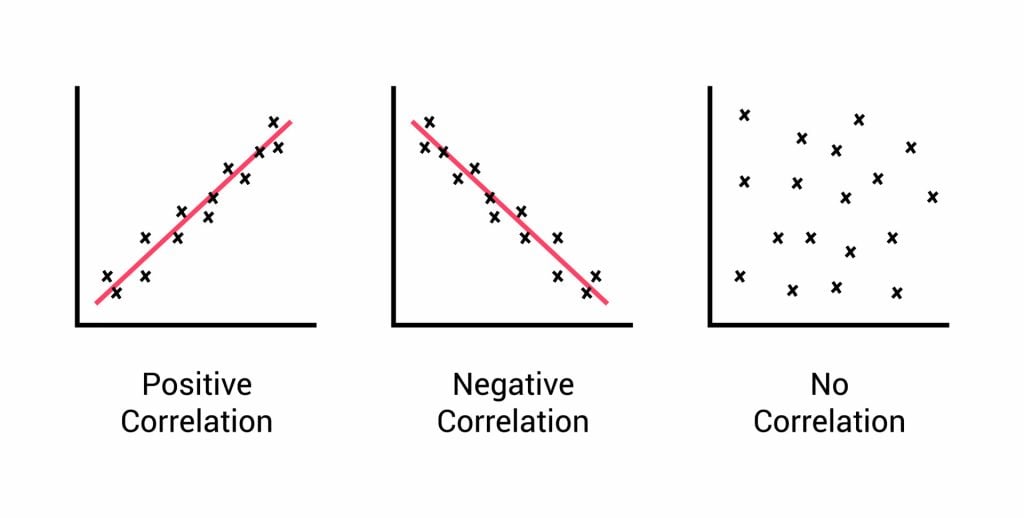
After looking at the scattergraph, if we want to be sure that a significant relationship does exist between the two variables, a statistical test of correlation can be conducted, such as Spearman’s rho.
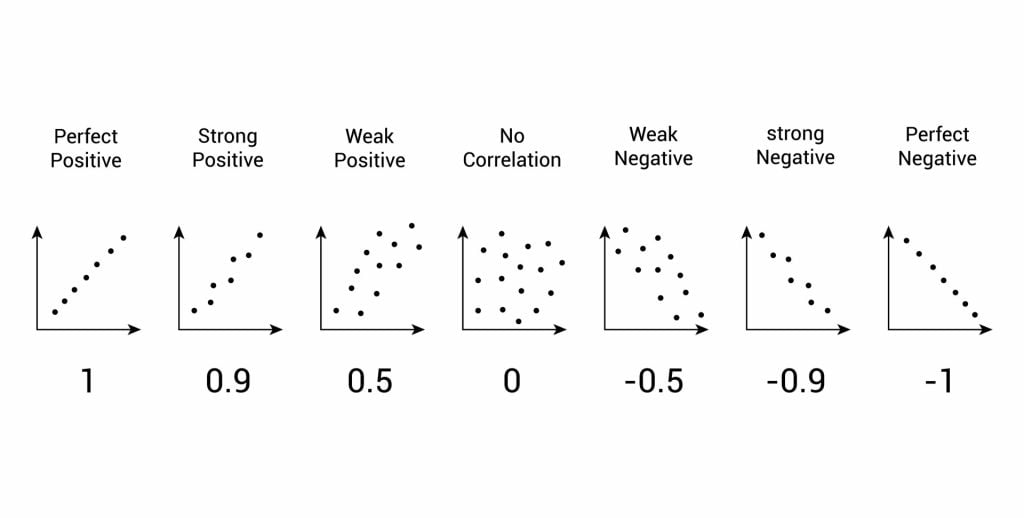
The test will give us a score, called acorrelation coefficient. This is a value between 0 and 1, and the closer to 1 the score is, the stronger the relationship between the variables. This value can be both positive e.g. 0.63, or negative -0.63.
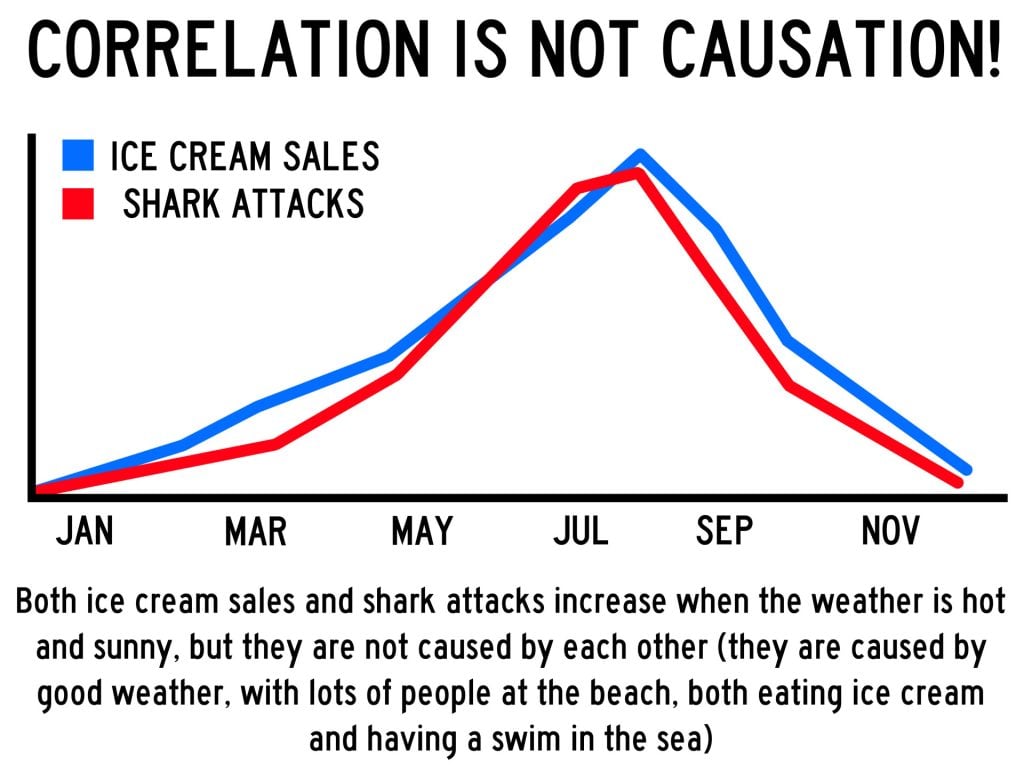
A correlation between variables, however, does not automatically mean that the change in one variable is the cause of the change in the values of the other variable. A correlation only shows if there is a relationship between variables.Correlation does not always prove causation, as a third variable may be involved.Interview MethodsInterviewsare commonly divided into two types: structured and unstructured.Structured interviewsare formal. The interview situation is standardized as far as possible. Structured interviews are formal, like job interviews.A fixed, predetermined set of questions is put to every participant in the same order and in the same way.Responses are recorded on a questionnaire, and the researcher presets the order and wording of questions, and sometimes the range of alternative answers.The interviewer stays within their role and maintains social distance from the interviewee.Unstructured interviewsare informal, like casual conversations. A general conversation normally precedes them, and the researcher deliberately adopts an informal approach to break down social barriers.There are no set questions, and the participant can raise whatever topics he/she feels are relevant and ask them in their own way. Questions are posed about participants’ answers to the subjectUnstructured interviews are most useful in qualitative research to analyze attitudes and values.Though they rarely provide a valid basis for generalization, their main advantage is that they enable the researcher to probe social actors’ subjective point of view.Questionnaire Method
A correlation between variables, however, does not automatically mean that the change in one variable is the cause of the change in the values of the other variable. A correlation only shows if there is a relationship between variables.Correlation does not always prove causation, as a third variable may be involved.Interview Methods
Correlation does not always prove causation, as a third variable may be involved.
Interview Methods
Interviewsare commonly divided into two types: structured and unstructured.Structured interviewsare formal. The interview situation is standardized as far as possible. Structured interviews are formal, like job interviews.A fixed, predetermined set of questions is put to every participant in the same order and in the same way.Responses are recorded on a questionnaire, and the researcher presets the order and wording of questions, and sometimes the range of alternative answers.The interviewer stays within their role and maintains social distance from the interviewee.Unstructured interviewsare informal, like casual conversations. A general conversation normally precedes them, and the researcher deliberately adopts an informal approach to break down social barriers.There are no set questions, and the participant can raise whatever topics he/she feels are relevant and ask them in their own way. Questions are posed about participants’ answers to the subjectUnstructured interviews are most useful in qualitative research to analyze attitudes and values.Though they rarely provide a valid basis for generalization, their main advantage is that they enable the researcher to probe social actors’ subjective point of view.Questionnaire Method
Interviewsare commonly divided into two types: structured and unstructured.
A fixed, predetermined set of questions is put to every participant in the same order and in the same way.
Responses are recorded on a questionnaire, and the researcher presets the order and wording of questions, and sometimes the range of alternative answers.
The interviewer stays within their role and maintains social distance from the interviewee.
There are no set questions, and the participant can raise whatever topics he/she feels are relevant and ask them in their own way. Questions are posed about participants’ answers to the subject
Unstructured interviews are most useful in qualitative research to analyze attitudes and values.
Though they rarely provide a valid basis for generalization, their main advantage is that they enable the researcher to probe social actors’ subjective point of view.
Questionnaire Method
The choice of questions is important because of the need to avoid bias or ambiguity in the questions, ‘leading’ the respondent or causing offense.
Its other practical advantages are that it is cheaper than face-to-face interviews and can be used to contact many respondents scattered over a wide area relatively quickly.
Observations
There are different types ofobservation methods:Covert observationis where the researcher doesn’t tell the participants they are being observed until after the study is complete. There could be ethical problems or deception and consent with this particular observation method.Overt observationis where a researcher tells the participants they are being observed and what they are being observed for.Controlled: behavior is observed under controlled laboratory conditions (e.g., Bandura’s Bobo doll study).Natural: Here, spontaneous behavior is recorded in a natural setting.Participant: Here, the observer has direct contact with the group of people they are observing. The researcher becomes a member of the group they are researching.Non-participant(aka “fly on the wall): The researcher does not have direct contact with the people being observed. The observation of participants’ behavior is from a distance
There are different types ofobservation methods:
Covert observationis where the researcher doesn’t tell the participants they are being observed until after the study is complete. There could be ethical problems or deception and consent with this particular observation method.Overt observationis where a researcher tells the participants they are being observed and what they are being observed for.Controlled: behavior is observed under controlled laboratory conditions (e.g., Bandura’s Bobo doll study).Natural: Here, spontaneous behavior is recorded in a natural setting.Participant: Here, the observer has direct contact with the group of people they are observing. The researcher becomes a member of the group they are researching.Non-participant(aka “fly on the wall): The researcher does not have direct contact with the people being observed. The observation of participants’ behavior is from a distance
Pilot StudyApilotstudyis a smallscale preliminarystudy conducted inorder to evaluate thefeasibility of the key steps in a future, full-scale project.
Pilot Study
Apilotstudyis a smallscale preliminarystudy conducted inorder to evaluate thefeasibility of the key steps in a future, full-scale project.
A pilot study can help the researcher spot any ambiguities (i.e. unusual things) or confusion in the information given to participants or problems with the task devised.
Sometimes the task is too hard, and the researcher may get a floor effect, because none of the participants can score at all or can complete the task – all performances are low.
The opposite effect is a ceiling effect, when the task is so easy that all achieve virtually full marks or top performances and are “hitting the ceiling”.
Research DesignIncross-sectional research, a researcher compares multiplesegments of the population at the same timeSometimes, we want to see how people change over time, as in studies of human development andlifespan.Longitudinal researchis a research design in which data-gatheringis administered repeatedly over an extended period of time.Incohort studies, the participants must share a common factor or characteristic such as age, demographic, or occupation. A cohort study is a type of longitudinal study in which researchers monitor and observe a chosen population over an extended period.Mixed methodsmeans using more than one research method to improve the study’s validity.
Research DesignIncross-sectional research, a researcher compares multiplesegments of the population at the same time
Research Design
Incross-sectional research, a researcher compares multiplesegments of the population at the same time
Sometimes, we want to see how people change over time, as in studies of human development andlifespan.Longitudinal researchis a research design in which data-gatheringis administered repeatedly over an extended period of time.Incohort studies, the participants must share a common factor or characteristic such as age, demographic, or occupation. A cohort study is a type of longitudinal study in which researchers monitor and observe a chosen population over an extended period.Mixed methodsmeans using more than one research method to improve the study’s validity.
Sometimes, we want to see how people change over time, as in studies of human development andlifespan.Longitudinal researchis a research design in which data-gatheringis administered repeatedly over an extended period of time.
Incohort studies, the participants must share a common factor or characteristic such as age, demographic, or occupation. A cohort study is a type of longitudinal study in which researchers monitor and observe a chosen population over an extended period.
Mixed methodsmeans using more than one research method to improve the study’s validity.
ReliabilityReliabilityis a measure of consistency, if a particular measurement is repeated and the same result is obtained then it is described as being reliable.Test-retest reliability: assessing the same person on two different occasions which shows the extent to which the test produces the same answers.Inter-observer reliability: the extent to which there is an agreement between two or more observers.
Reliability
Reliabilityis a measure of consistency, if a particular measurement is repeated and the same result is obtained then it is described as being reliable.Test-retest reliability: assessing the same person on two different occasions which shows the extent to which the test produces the same answers.Inter-observer reliability: the extent to which there is an agreement between two or more observers.
Reliabilityis a measure of consistency, if a particular measurement is repeated and the same result is obtained then it is described as being reliable.
Meta-Analysis
Meta-analysisis a statistical procedure used to combine and synthesize findings from multiple independent studies to estimate the average effect size for a particular research question.
Peer Review
The journal selects two or more appropriate experts (psychologists working in a similar field) to peer review the article without payment. The peer reviewers assess: the methods and designs used, originality of the findings, the validity of the original research findings and its content, structure and language.
Feedback from the reviewer determines whether the article is accepted. The article may be: Accepted as it is, accepted with revisions, sent back to the author to revise and re-submit or rejected without the possibility of submission.
Peer review is important because it prevent faulty data from entering the public domain, it provides a way of checking the validity of findings and the quality of the methodology and is used to assess the research rating of university departments.
Peer reviews may be an ideal, whereas in practice there are lots of problems. For example, it slows publication down and may prevent unusual, new work being published. Some reviewers might use it as an opportunity to prevent competing researchers from publishing work.
Some people doubt whether peer review can really prevent the publication of fraudulent research.
The advent of the internet means that a lot of research and academic comment is being published without official peer reviews than before, though systems are evolving on the internet where everyone really has a chance to offer their opinions and police the quality of research.
Types of DataQuantitative datais numerical data e.g. reaction time or number of mistakes. It represents how much or how long, how many there are of something. A tally of behavioral categories and closed questions in a questionnaire collect quantitative data.
Types of Data
Validity
Validitymeans how well a piece of research actually measures what it sets out to, or how well it reflects the reality it claims to represent.
Validity is whether the observed effect is genuine and represents what is actually out there in the world.
Features of Science
Statistical TestingA significant result is one where there is a low probability that chance factors were responsible for any observed difference, correlation, or association in the variables tested.If our test is significant, we can reject our null hypothesis and accept our alternative hypothesis.If our test is not significant, we can accept our null hypothesis and reject our alternative hypothesis. A null hypothesis is a statement of no effect.In Psychology, we usep< 0.05(as it strikes a balance between making a type I and II error) but p < 0.01 is used in tests that could cause harm like introducing a new drug.A type I error is when the null hypothesis is rejected when it should have been accepted (happens when a lenient significance level is used, an error of optimism).A type II error is when the null hypothesis is accepted when it should have been rejected (happens when a stringent significance level is used, an error of pessimism).
Statistical Testing
A significant result is one where there is a low probability that chance factors were responsible for any observed difference, correlation, or association in the variables tested.If our test is significant, we can reject our null hypothesis and accept our alternative hypothesis.If our test is not significant, we can accept our null hypothesis and reject our alternative hypothesis. A null hypothesis is a statement of no effect.In Psychology, we usep< 0.05(as it strikes a balance between making a type I and II error) but p < 0.01 is used in tests that could cause harm like introducing a new drug.A type I error is when the null hypothesis is rejected when it should have been accepted (happens when a lenient significance level is used, an error of optimism).A type II error is when the null hypothesis is accepted when it should have been rejected (happens when a stringent significance level is used, an error of pessimism).
A significant result is one where there is a low probability that chance factors were responsible for any observed difference, correlation, or association in the variables tested.
If our test is significant, we can reject our null hypothesis and accept our alternative hypothesis.
If our test is not significant, we can accept our null hypothesis and reject our alternative hypothesis. A null hypothesis is a statement of no effect.
In Psychology, we usep< 0.05(as it strikes a balance between making a type I and II error) but p < 0.01 is used in tests that could cause harm like introducing a new drug.
A type I error is when the null hypothesis is rejected when it should have been accepted (happens when a lenient significance level is used, an error of optimism).
A type II error is when the null hypothesis is accepted when it should have been rejected (happens when a stringent significance level is used, an error of pessimism).
Ethical Issues

Olivia Guy-Evans, MSc
BSc (Hons) Psychology, MSc Psychology of Education
Olivia Guy-Evans is a writer and associate editor for Simply Psychology. She has previously worked in healthcare and educational sectors.
Saul McLeod, PhD
BSc (Hons) Psychology, MRes, PhD, University of Manchester
Saul McLeod, PhD., is a qualified psychology teacher with over 18 years of experience in further and higher education. He has been published in peer-reviewed journals, including the Journal of Clinical Psychology.
