A code is a word or brief phrase that captures the essence of why you think a particular bit of data may be useful. A good analogy is that a code describes data like a hashtag describes a tweet.
Codes usually are attached to ‘chunks’ of varying size-words, phrases, sentences, or whole paragraphs. They can take the form of a straightforward descriptive label or a more complex interpretive one (e.g. metaphor).
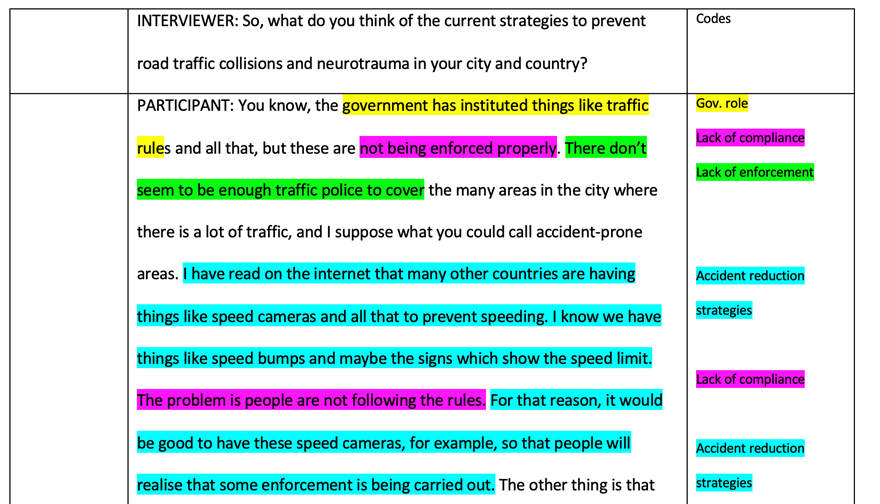 Coding is an iterative process, with researchers refining and revising their codes as their understanding of the data evolves.
The ultimate goal is to develop a coherent and meaningful coding scheme that captures the richness and complexity of the participants’ experiences and helps answer the research questions.
Step 1: Familiarize yourself with the data
Step 2: Decide on your coding approach
If you decide not to code everything, it’s crucial to:
Step 3: Do a first round of coding
Descriptive codes
Step 4: Review and refine codes
Interpretive (latent) codes
Interpretive codes go beyond simple descriptions and reflect the researcher’s understanding of the underlying (latent) meanings, experiences, or processes captured in the data.
These codes require the researcher to interpret the participants’ words and actions in light of the research questions and theoretical framework.
They often draw on existing theories or concepts to interpret the data, providing a more conceptual “take” on what the participants are saying.
Latent codes require the researcher to dig beneath the surface and make inferences based on their expertise and knowledge. Latent coding requires more experience and theoretical knowledge than semantic coding.
For example, latent coding is a type of interpretive coding which goes beyond surface meaning in data. It digs for underlying emotions, motivations, or unspoken ideas the participant might not explicitly state
Latent codinglooks for subtext, interprets the “why” behind what’s said, and considers the context (e.g. cultural influences, or unconscious biases).
Theoretical codes
Theoretical codes are the most abstract and conceptual type of codes. They are used to link the data to existing theories or to develop new theoretical insights.
Theoretical codes often emerge later in the analysis process, as researchers begin to identify patterns and connections across the descriptive and interpretive codes.
Pattern codes
Pattern coding is often used in the later stages of data analysis, after the researcher has thoroughly familiarized themselves with the data and identified initial descriptive and interpretive codes.
By identifying patterns and relationships across the data, pattern codes help to develop a more coherent and meaningful understanding of the phenomenon and can contribute to theory development or refinement.
Let’s say a researcher is studying the experiences of new mothers returning to work after maternity leave. They conduct interviews with several participants and initially use descriptive and interpretive codes to analyze the data. Some of these codes might include:
As the researcher reviews the coded data, they may notice that several of these codes relate to the broader theme of “work-family conflict.”
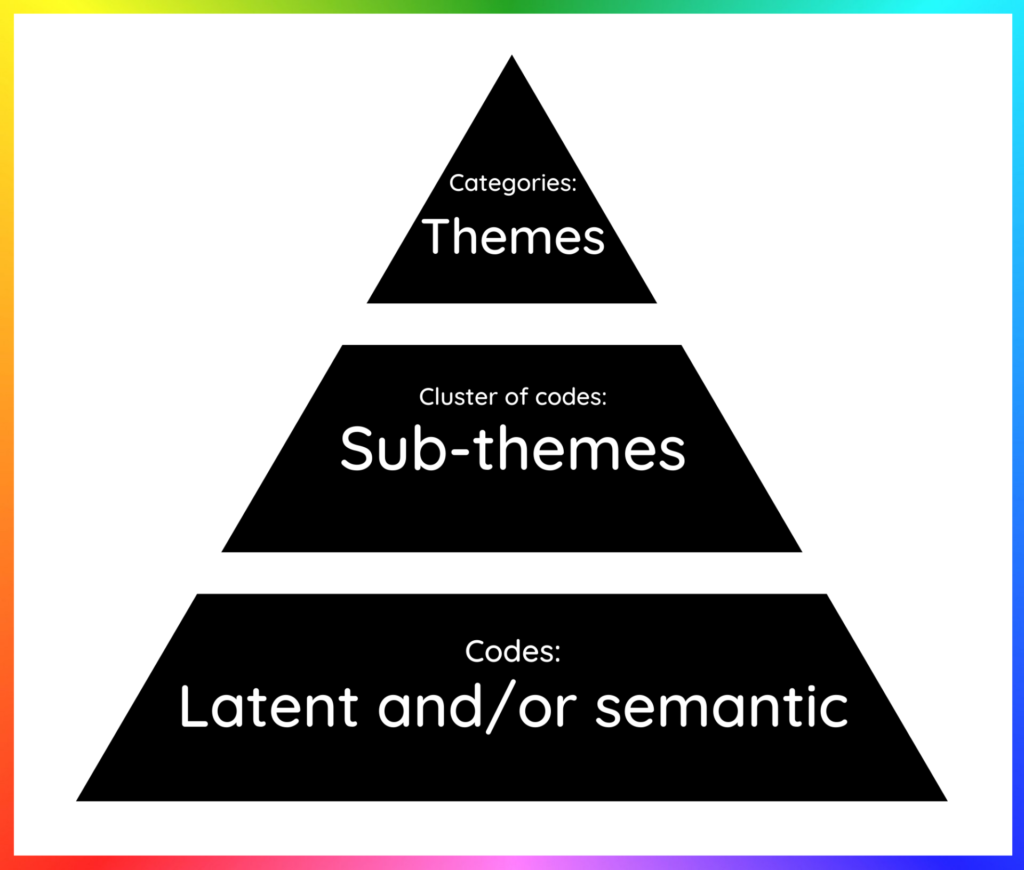 Codes are grouped into categories (sub-themes) based on similarities and relationships between them. Categories are then further analyzed and combined to identify overarching themes that capture the essential meanings, patterns, or concepts in the data. This process involves continual refinement, comparison, and abstraction of the categories. Researchers use their interpretive skills to identify the central ideas or recurring motifs that the categories represent, which become the themes that provide a higher-level understanding of the qualitative data.

Olivia Guy-Evans, MSc
BSc (Hons) Psychology, MSc Psychology of Education
Olivia Guy-Evans is a writer and associate editor for Simply Psychology. She has previously worked in healthcare and educational sectors.
Saul McLeod, PhD
BSc (Hons) Psychology, MRes, PhD, University of Manchester
Saul McLeod, PhD., is a qualified psychology teacher with over 18 years of experience in further and higher education. He has been published in peer-reviewed journals, including the Journal of Clinical Psychology.
