On This Page:ToggleSummary TableTheoretical AssumptionsKey FiguresPsychodynamic vs PsychoanalyticHistorical TimelineIssues and DebatesCritical Evaluation
On This Page:Toggle
On This Page:
The psychodynamic approach in psychology emphasizes unconscious processes and unresolved past conflicts as influences on behavior. Rooted in Freud’s theories, it explores the interplay of drives, desires, and defense mechanisms in shaping personality and behavior.
Key Takeaways
Sigmund Freud(writing between the 1890s and the 1930s) developed a collection of theories which have formed the basis of the psychodynamic approach to psychology.
His theories are clinically derived – i.e., based on what his patients told him during therapy. The psychodynamic therapist would usually be treating the patient for depression or anxiety-related disorders.
Summary Table
Key Features• Tripartite Personality• Psychosexual Stages• Unconscious Mind• Drive / Instinct Theory• Defence Mechanisms• Oedipus / Electra Complex
Methodology• Case Studies (Little Hans)•Dream Analysis• Free Association• Projective Tests (TAT, Inkblots)• Clinical interviews• HypnosisStrengths• First “talking cure”: psychoanalysis• Importance of childhood• Personality theory• Recognition that some physical symptoms may have psychological (emotional) causes• Play therapy (Anna Freud)Weaknesses• Unfalsifiable• Subjective interpretation• Lacks empirical evidence)• Deterministic (little free will)• Unrepresentative sample• Reductionist: ignores cognitive processes
Methodology• Case Studies (Little Hans)•Dream Analysis• Free Association• Projective Tests (TAT, Inkblots)• Clinical interviews• Hypnosis
Strengths• First “talking cure”: psychoanalysis• Importance of childhood• Personality theory• Recognition that some physical symptoms may have psychological (emotional) causes• Play therapy (Anna Freud)
Weaknesses• Unfalsifiable• Subjective interpretation• Lacks empirical evidence)• Deterministic (little free will)• Unrepresentative sample• Reductionist: ignores cognitive processes
Theoretical Assumptions
Theoretical assumptions in psychology are basic statements or beliefs that provide a framework for understanding human behavior. They also help researchers to develop new theories and to test existing theories.
Importance of the unconscious mind
Theunconscious mindcomprises mental processes inaccessible to consciousness that influence judgment, feelings, or behavior (Wilson, 2002).
According to the psychodynamic approach, the unconscious is the part of the mind that contains things we are unaware of, such as feelings, thoughts, urges, and memories.
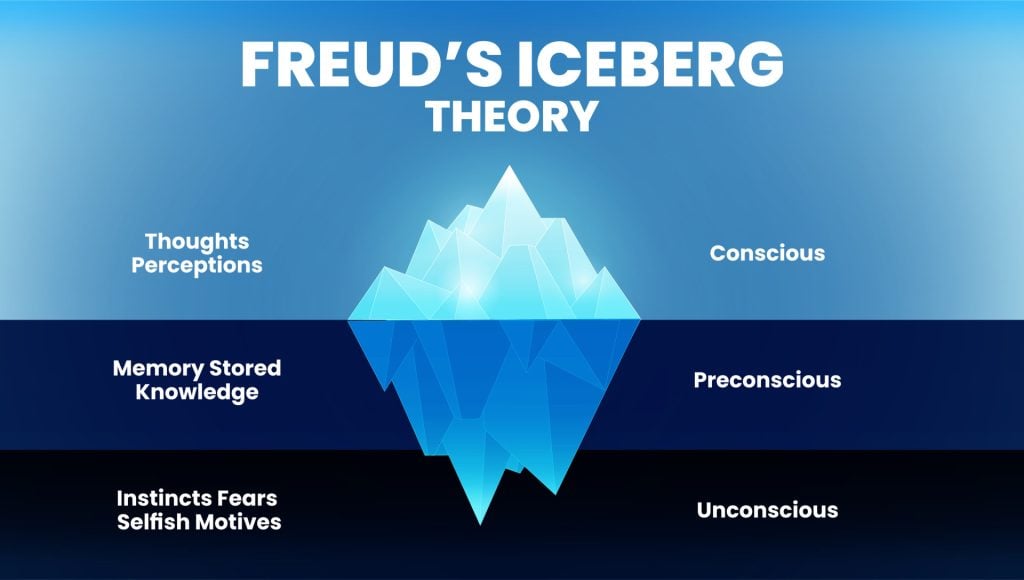
Most of the content of the unconscious is unacceptable or unpleasant and could cause feelings of pain, anxiety, or conflict if it becomes conscious.
The unconscious is seen as a vital part of the individual. It is irrational, emotional, and has no concept of reality which is why its attempts to leak out must be inhibited.
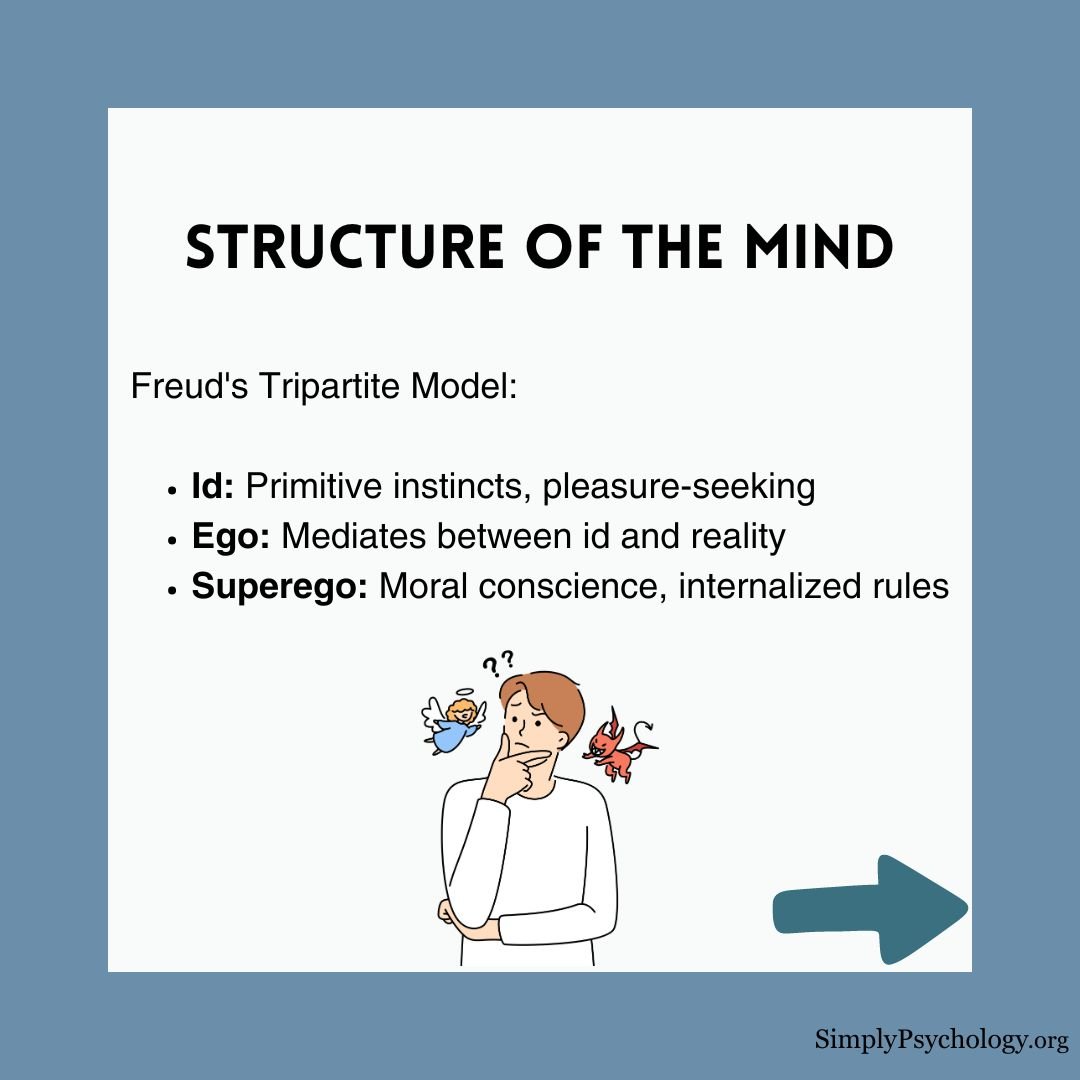
The role of the unconscious mind is to protect the ego from this content. However, according to Freud, the content of the unconscious motivates our feelings, motives, and decisions.
Importance of early experience
Our behavior and feelings as adults (including psychological problems) are rooted in ourchildhood experiences.
The psychodynamic theory states that events in our childhood have a significant influence on our adult lives, shaping our personality.
Freud’s theory of psychosexual stages of development predicated that childhood experiences create the adult personality. Events that occur in childhood can remain in the unconscious and cause problems as adults, such as mental illness.
Psychic determinism
Freud believed that slips of the tongue provided an insight into the unconscious mind and that there were no accidents, every behavior (including slips of the tongue) was significant (i.e., all behavior is determined).
Behavior can be explained in terms of the inner conflicts of the mind
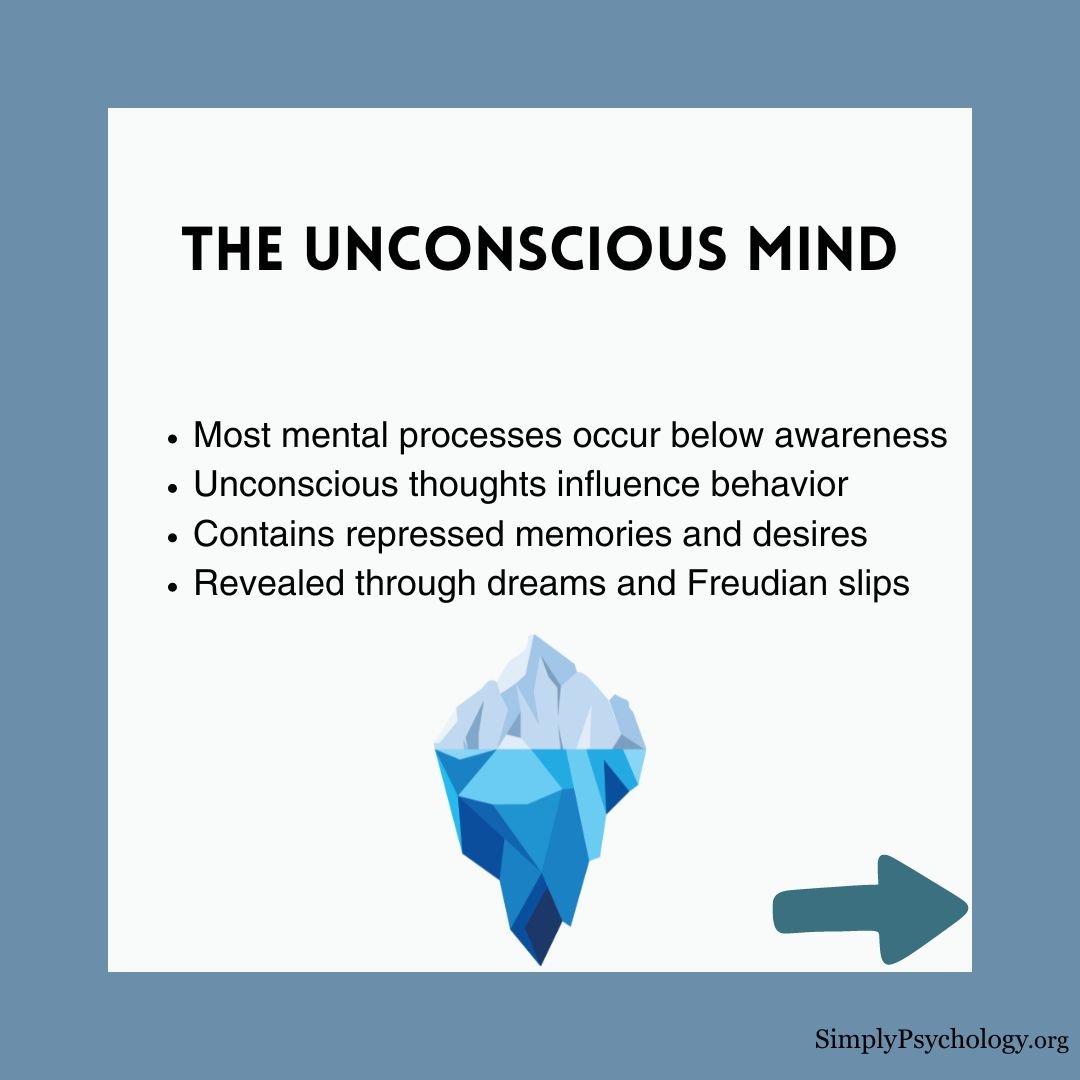
Personality comprises three parts (i.e., tripartite): theid, ego, and super-ego. Parts of the unconscious mind (the id and superego) are in constant conflict with the conscious part of the mind (the ego).

To be mentally healthy, the ego has to be able to balance the demands of the ego and the superego. If the superego is dominant, the individual might develop a neurosis e.g., depression. If the id is dominant, the individual might develop a psychosis e.g., schizophrenia.
Having identified the problem, this can be brought into the conscious, where the imbalance can be resolved, returning equanimity between the id, ego, and superego.
Consequently, the defense mechanisms will only operate at the maintenance level, and the mental illness will be cured.
Key Figures
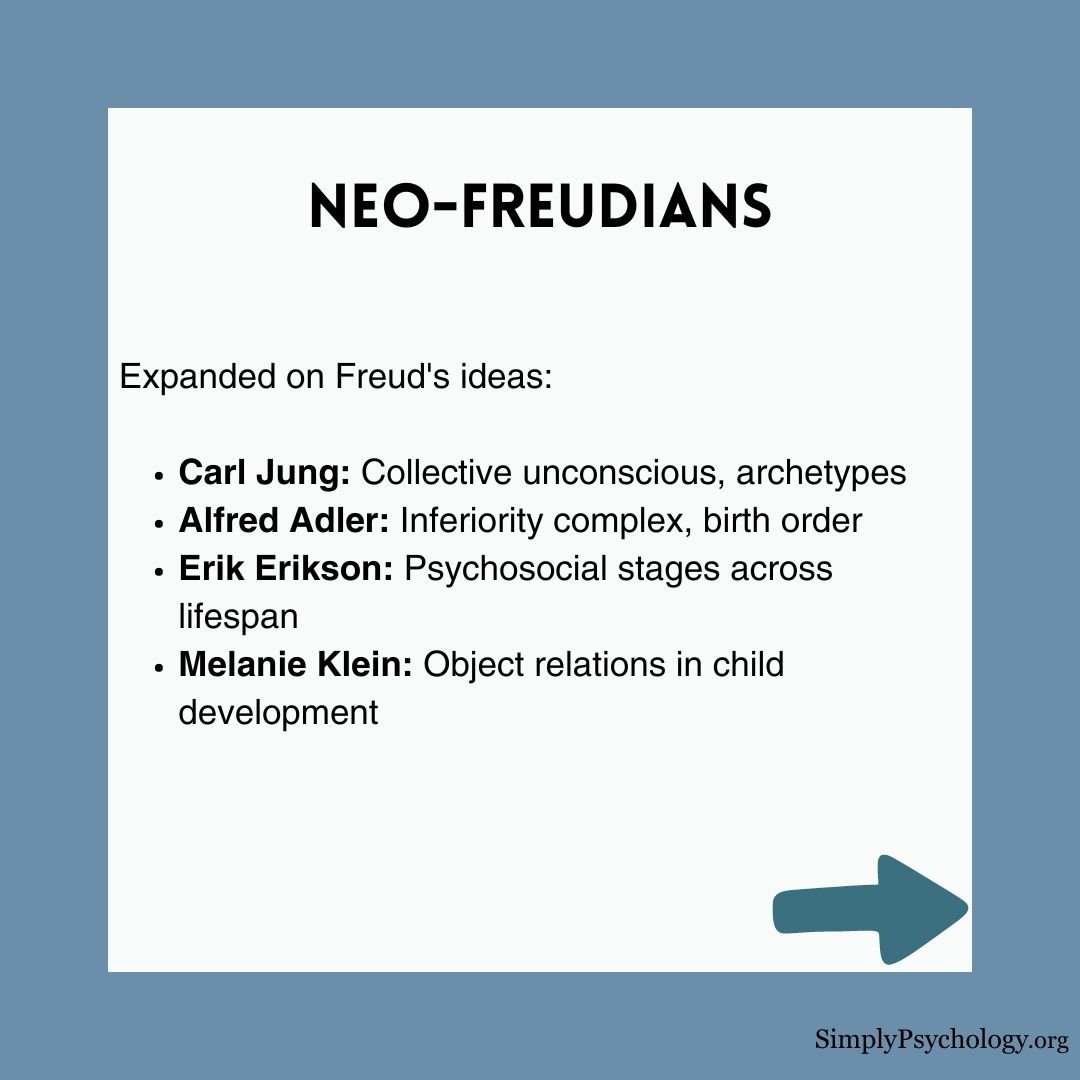
Freudians and neo-Freudians both subscribe to the psychodynamic approach to psychology, which emphasizes the role of unconscious mental processes in human behavior and emotions.
Neo-Freudiansexpanded on or challenged Freud’s original theories.
Psychodynamic vs Psychoanalytic
Both psychodynamic and psychoanalytic theories originate from the ideas of Sigmund Freud, but they have different applications and emphases.
Psychodynamic theory is a broader term that encompasses a variety of theories that are based on Freudian principles.
Psychodynamic theorists generally agree that the unconscious mind is important, but they may have different views on its role in human behavior and how it develops.
Some psychodynamic theorists also emphasize social and cultural factors more than Freud did. Some of the most notable Neo-Freudians include Carl Jung, Alfred Adler, Karen Horney, and Erich Fromm.
Historical Timeline

Issues and Debates
Free Will vs Determinism
Nature vs. NurtureSigmund Freud believed both nature (innate drives) and nurture (early life experiences) played crucial roles in human development. For Freud, the interplay of nature and nurture was central to understanding human psychology.He posited that individuals have inborn instincts and drives, like the id’s desires. Simultaneously, he emphasized the profound impact of early childhood experiences, especially within the family dynamic, on personality and behavior.
Nature vs. Nurture
Sigmund Freud believed both nature (innate drives) and nurture (early life experiences) played crucial roles in human development. For Freud, the interplay of nature and nurture was central to understanding human psychology.
He posited that individuals have inborn instincts and drives, like the id’s desires. Simultaneously, he emphasized the profound impact of early childhood experiences, especially within the family dynamic, on personality and behavior.
Holism vs. Reductionism
The psychodynamic approach is primarily holistic, although it contains some reductionist elements. It views individuals as integrated beings where conscious and unconscious processes are interconnected, and symptoms are understood within the context of a person’s entire life story.
While it does break down the psyche into components like id, ego, and superego, these are seen as interdependent parts of a whole rather than isolated elements.
The approach emphasizes how multiple factors work together to shape psychological development.
Idiographic vs. Nomothetic
However, he also proposed that the ways in which these processes manifest themselves in the individual is unique (idiographic).
Are the research methods used scientific?
Critical Evaluation
The psychodynamic approach has given rise to one of the first “talking cure”, psychoanalysis, on which many psychological therapies are now based. Psychoanalysis is rarely used now in its original form, but it is still used in a shorter version in some cases.
Psychoanalytic therapy has been seen as appropriate mainly for theneurotic disorders(e.g. anxiety and eating disorders) rather than for the psychotic disorders such as schizophrenia. It is also used for depression although its effectiveness in this area is more questionable because of the apathetic nature of the depressive patients.
Bachrach et al., (1991) suggests that psychoanalysis may not be appropriate for patients suffering fromobsessive-compulsive disorderin that it may inadvertently increase their tendency to over-interpret events in their life.
The greatest criticism of the psychodynamic approach is that it is unscientific in its analysis of human behavior. Many of the concepts central to Freud’s theories are subjective and as such, difficult to test scientifically.
For example, how can scientifically study concepts like the unconsciousmindor the tripartite personality? In this respect, it could be argued that the psychodynamic perspective isunfalsifiableas its theories cannot be empirically investigated.
However, cognitive psychology has identified unconscious processes, such asprocedural memory(Tulving, 1972),automatic processing(Bargh & Chartrand, 1999; Stroop, 1935), and social psychology have shown the importance ofimplicit processing(Greenwald & Banaji, 1995). Such empirical findings have demonstrated the role of unconscious processes in human behavior.
The concepts of id, ego and superego are very abstract and difficult to test experimentally, so evidence is obtained from case studies (Little Hans, andAnna O). However, the sample used in these case studies is mainly Austrian, so lacks population validity.
Kline (1989) argues that psychodynamic theory comprises a series of hypotheses, some more easily tested than others and some with more supporting evidence than others. Also, while the theories of the psychodynamic approach may not be easily tested, this does not mean that it does not have strong explanatory power.
The main problem here is that the case studies are based on studying one person in detail, and concerning Freud, the individuals in question are most often middle-aged women from Vienna (i.e., his patients). This makes generalizations to the wider population (e.g., the whole world) difficult.
Another problem with thecase study methodis that it is susceptible to researcher bias. Reexamination of Freud’s own clinical work suggests that he sometimes distorted his patients” case histories to “fit” with his theory (Sulloway, 1991).
The individual is not seen as responsible for their disorders however as the conflicts which lead to the disorder are unconscious there is nothing they can do about it without an analyst, they are disempowered.
The psychodynamic approach can be criticized for being sexist against women. For example, Freud believed that females” penis envy made them inferior to males. He also thought that females tended to develop weakersuperegosand were more prone to anxiety than males.
Finally, it cannot explain the biological symptoms observed in some disorders, such as enlarged ventricles in schizophrenics.
References
Adler, A., Jelliffe, S. Ely. (1917). Study of Organ Inferiority and its Psychical Compensation: A Contribution to Clinical Medicine. New York: Nervous and Mental Disease Publishing Company.
Adler, A. (1927). Understanding human nature. New York: Greenburg.
Bachrach, H. M., Galatzer-Levy, R., Skolnikoff, A., & Waldron Jr, S. (1991). On the efficacy of psychoanalysis.Journal of the American Psychoanalytic Association,39(4), 871-916.
Bargh, J. A., & Chartrand, T. L. (1999).The unbearable automaticity of being.American psychologist, 54(7), 462.
Erikson, E. H. (1950).Childhood and society. New York: Norton.
Freud, A. (1936).Ego & the mechanisms of defense.
Freud, S., & Breuer. J. (1895).Studies on hysteria. InStandard edition(Vol. 2, pp. 1–335).
Freud, S. (1896). Heredity and the etiology of the neuroses. InStandard edition(Vol. 3, pp. 142–156).
Freud, S. (1900).The interpretation of dreams. InStandard edition(Vols. 4 & 5, pp. 1–627).
Freud, S. (1909). Notes upon a case of obsessional neurosis. InStandard edition(Vol. 10, pp. 153–249).
Freud, S. (1909). Analysis of a phobia of a five year old boy. In The Pelican Freud Library (1977), Vol 8, Case Histories 1, pages 169-306.
Freud, S. (1915).The unconscious. SE, 14: 159-204.
Freud, A. (1936).The Ego and the Mechanisms of Defense. International Universities Press, Inc.
Fromm, E. (1959). Psychoanalysis and Zen Buddhism.Psychologia, 2(2), 79-99.
Greenwald, A. G., & Banaji, M. R. (1995). Implicit social cognition: attitudes, self-esteem, and stereotypes.Psychological review, 102(1), 4.
Jung, C. G. (1907). Ueber die Psychologie der Dementia praecox.Psychological Bulletin, 4(6), 196-197.
Jung, C. G. (1912).Wandlungen und Symbole der Libido: Beiträge zur Entwicklungsgeschichte des Denkens.F. Deuticke.
Jung, C. G., et al. (1964).Man and his Symbols, New York, N.Y.: Anchor Books, Doubleday.
Kline, P. (1989). Objective tests of Freud’s theories.Psychology Survey, 7, 127-45.
Stroop, J. R. (1935). Studies of interference in serial verbal reactions.Journal of experimental psychology, 18(6), 643.
Sulloway, F. J. (1991). Reassessing Freud’s case histories: The social construction of psychoanalysis.Isis, 82(2), 245-275.
Tulving, E. (1972). Episodic and semantic memory. In E. Tulving & W. Donaldson (Eds.),Organization of Memory, (pp. 381–403). New York: Academic Press.
Reich, W. (1933). On character analysis.The Psychoanalytic Review(1913-1957), 20, 89.
Wilson, T. D. (2004).Strangers to ourselves. Harvard University Press.
FAQs
Is there a difference between psychodynamic and psychoanalytic?The words psychodynamic and psychoanalytic are often confused. Remember that Freud’s theories were psychoanalytic, whereas the term ‘psychodynamic’ refers to both his theories and those of his followers.
Is there a difference between psychodynamic and psychoanalytic?
The words psychodynamic and psychoanalytic are often confused. Remember that Freud’s theories were psychoanalytic, whereas the term ‘psychodynamic’ refers to both his theories and those of his followers.
What is psychodynamic in simple terms?
Sigmund Freud highlights the role of the unconscious mind, the structure of personality, and the influence that childhood experiences have on later life.





Olivia Guy-Evans, MSc
BSc (Hons) Psychology, MSc Psychology of Education
Olivia Guy-Evans is a writer and associate editor for Simply Psychology. She has previously worked in healthcare and educational sectors.
Saul McLeod, PhD
BSc (Hons) Psychology, MRes, PhD, University of Manchester
Saul McLeod, PhD., is a qualified psychology teacher with over 18 years of experience in further and higher education. He has been published in peer-reviewed journals, including the Journal of Clinical Psychology.
