Have you ever told yourself:
“I don’t belong here.”
“I am fooling everyone.”
“I”m a total fraud, and everyone’s going to find out.”
“What am I doing?”
You’re not alone if you have ever felt like an imposter at what you do or at work. It is estimated that 70 percent of people will experience this at least once in their lifetime. These thoughts are related to the imposter syndrome.
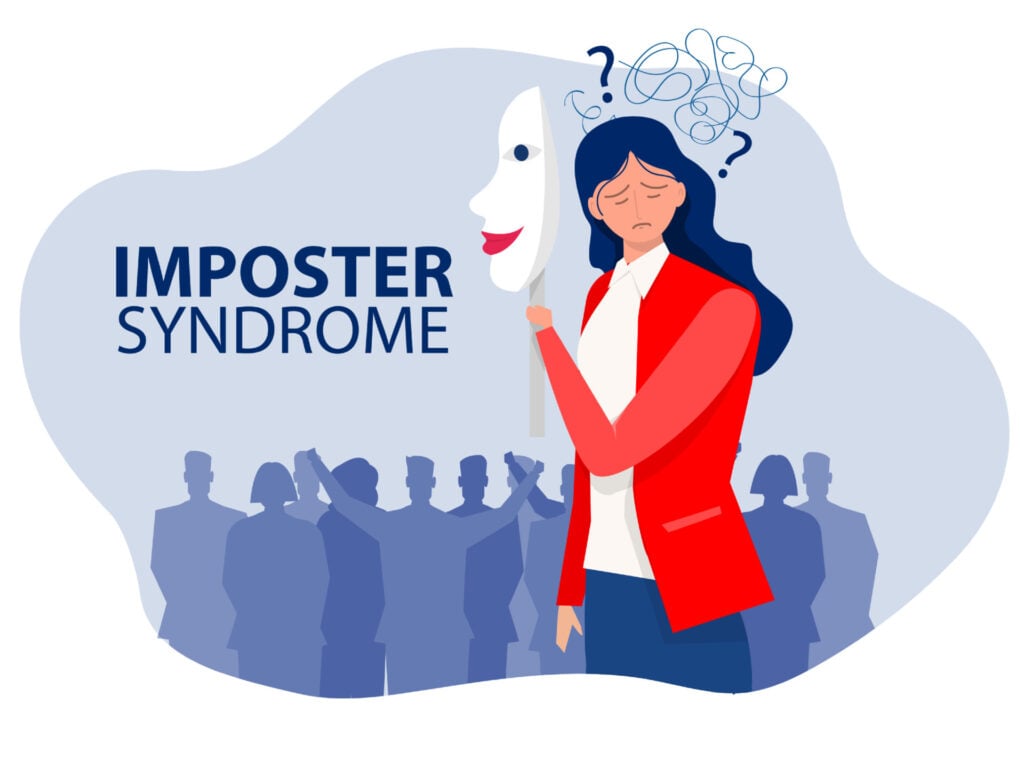 Imposter syndrome feels like an internal belief that one’s accomplishments are undeserved or a fraud, despite evidence of their competence and achievements.
What Is Imposter Syndrome?
What it Feels Like
Imposter feelings convey a match between your self-perception and how others perceive you. Even as others praise your talents, you owe your successes to “timing” or “good luck.” You don’t believe you earned them based on your merits, and you worry others will eventually realize the same thing.
A person with impostor syndrome has:
And while, for some, the impostor syndrome candrive feelings of motivationto achieve, it typically comes at a cost in the manner of ongoing anxiety. One might over-prepare or work much harder to “make sure” that nobody discovers one is a fraud.
Hence, you pressure yourself to work harder to:
The work you put in can keep you in this cycle forever. Your additional accomplishments don’t comfort you. In fact, you consider them nothing more than the product of your efforts to preserve the illusion of your success.
The recognition you earn is labeled as pity orsympathy, and even though you link your accomplishments to luck, you take full responsibility for any mistakes you make. Minor errors reinforce your lack of ability.
Unfortunately, this fuels a cycle of guilt,anxiety, and depression over time. You live in constant fear of discovery, so you strive for perfection in everything you do – you might feel worthless when you can’t achieve your goals, not to mention overwhelmed and burnt out from your continued efforts.
Causes
Two main family dynamics, along with societal expectations, contribute to the development of the impostor phenomenon in high-achieving women from an early age:
1. Sensitive One
In this scenario, the woman is labeled as the “sensitive” or socially adept one in the family, while a sibling or close relative is designated as the “intelligent” one.
Family members imply that regardless of her actual intellectual accomplishments, she can never prove herself to be as bright as her sibling.
The woman believes this family myth to some extent but also wants to disprove it. She uses school as an opportunity to demonstrate her intelligence to her family and herself.
Despite achieving outstanding grades, academic honors, and praise from teachers, her family remains unimpressed and continues to attribute greater intelligence to the “bright” sibling, even if that sibling’s academic performance is inferior.
This leads the woman to doubt her intellect and wonder if her high achievements are due to her sensitivity to teachers’ expectations, social skills, and feminine charms, rather than her intelligence.
She becomes trapped in a cycle of seeking validation for her intellectual competence while secretly doubting herself, thus perpetuating the impostor phenomenon.
2. Excessive Praise
The second family dynamic that contributes to the impostor phenomenon involves excessive praise and unrealistic expectations:
In this scenario, the family constantly conveys to the girl that she is superior in every way – intellect, personality, appearance, and talents. They tell her that she can achieve anything with ease and recount examples of her precocity as an infant and toddler.
However, as the child grows, she inevitably encounters difficulties and realizes that she cannot effortlessly excel at everything. Despite this, she feels pressured to fulfill her family’s expectations and maintain the illusion of perfection.
The girl begins to doubt her abilities and her parents’ perceptions of her. When she enters school, these doubts intensify. Although she performs exceptionally well, she has to study to achieve good results.
Having internalized her parents’ definition of intelligence as “perfection with ease,” she concludes that she must be unintelligent since she doesn’t meet this unrealistic standard.
The article provides examples of women who, as children, would pretend to be sick to avoid revealing their imperfections or hide their studying from parents who believed that truly intelligent people don’t need to study.
By employing these strategies, they convinced their parents of their effortless success but internally felt like phonies.
How it Affects Your Life
Regardless of the different types of imposters, all of the symptoms associated with imposter syndrome can affect these aspects of a person’s life.
Work PerformanceOne may fear that their coworkers and supervisors expect more from them than they can manage. This person may feel unable to deliver.This person might hold themselves back and avoid seeking higher achievements due to the fear of not succeeding and the fear of doing things the wrong way. All of this can affect work performance.
Work Performance
One may fear that their coworkers and supervisors expect more from them than they can manage. This person may feel unable to deliver.
This person might hold themselves back and avoid seeking higher achievements due to the fear of not succeeding and the fear of doing things the wrong way. All of this can affect work performance.
Job Dissatisfaction/BurnoutSometimes, one may not feel sufficiently challenged in their profession, but a fear of failure or a coworker finding out they are fake stops them from pursuing a promotion or additional responsibility.One works to overcome feelings of inadequacy, and there is a high-risk possibility of burnout. Research suggests that people with impostor syndrome tend to remain in their roles because they do not believe they can achieve higher.The person may underestimate their skills or fail to acknowledge how other positions might emphasize their abilities.
Job Dissatisfaction/Burnout
Sometimes, one may not feel sufficiently challenged in their profession, but a fear of failure or a coworker finding out they are fake stops them from pursuing a promotion or additional responsibility.
One works to overcome feelings of inadequacy, and there is a high-risk possibility of burnout. Research suggests that people with impostor syndrome tend to remain in their roles because they do not believe they can achieve higher.
The person may underestimate their skills or fail to acknowledge how other positions might emphasize their abilities.
Avoid Seeking PromotionRelated to the aspect above, undervaluing skills can lead those with impostor syndrome to negate their worth.One may avoid aspiring for a promotion or a raise because they do not believe they deserve it.
Avoid Seeking Promotion
Related to the aspect above, undervaluing skills can lead those with impostor syndrome to negate their worth.
One may avoid aspiring for a promotion or a raise because they do not believe they deserve it.
Taking on ResponsibilitiesImposters may focus heavily on smaller and more manageable tasks instead of taking on more duties to prove their abilities.Therefore, they may avoid taking on extra tasks for fear that they will compromise the quality of their other duties.
Taking on Responsibilities
Imposters may focus heavily on smaller and more manageable tasks instead of taking on more duties to prove their abilities.
Therefore, they may avoid taking on extra tasks for fear that they will compromise the quality of their other duties.
Self-DoubtSuccess creates a cycle of self-doubt for people with imposter syndrome. Imposters, even when achieving a significant milestone, may be unable to recognize their accomplishments.Rather than celebrate their achievements, this person may worry that others will discover the truth of their abilities.
Self-Doubt
Success creates a cycle of self-doubt for people with imposter syndrome. Imposters, even when achieving a significant milestone, may be unable to recognize their accomplishments.
Rather than celebrate their achievements, this person may worry that others will discover the truth of their abilities.
Attributing Success to External FactorsImposters deny their competency; they feel their successes are due toexternal factorsor luck. But when things go wrong due to outside reasons, the person may actually blame themselves.
Attributing Success to External Factors
Imposters deny their competency; they feel their successes are due toexternal factorsor luck. But when things go wrong due to outside reasons, the person may actually blame themselves.
Focus on Tasks/Goal-SettingThe fear of failure and the drive to be the best can sometimes lead to overachievement. The imposter may set highly challenging goals and experience heavy disappointment when they cannot achieve them.
Focus on Tasks/Goal-Setting
The fear of failure and the drive to be the best can sometimes lead to overachievement. The imposter may set highly challenging goals and experience heavy disappointment when they cannot achieve them.
Mental Health ImpactThe fear of not being adequate enough can lead to mental health complications in some cases. One may experience:FrustrationDepressionFear of being a fraudLack of self-confidenceAnxietyShame
Mental Health Impact
The fear of not being adequate enough can lead to mental health complications in some cases. One may experience:
Why is the impostor phenomenon so difficult to overcome?
A combination of seeking external validation, facing negative societal consequences for confidence, and being trapped in an exhausting self-reinforcing cycle of fear and hard work make the impostor phenomenon very challenging for high-achieving women to overcome.
Five Types of Imposters
According to leading imposter syndrome researcher Dr. Valerie Young, there are five main types of identified “imposters.”
These competence types reflect one’s inner beliefs about what competency means to them. Let’s take a closer look at them.
1. The Natural Genius
This imposter spent their life picking up new skills with little to no effort, and they believe they should understand new material and methods in record time. They set themselves lofty goals and feel crushed when they don’t succeed on their first try.
They have this belief that competent people can handle anything with little difficulty, which can lead them to feel like a fraud when they begin to struggle.
If something doesn’tcome easily to them or fails on their first try, they might feel ashamed and embarrassed.
2. The Perfectionist
This type of imposter primarily focuses on how they do things, to the point where they demand perfection – coming from themselves – in every aspect of their lives.
However, since perfection isn’t a realistic goal, they can’t meet these standards. So, instead of acknowledging the hard work they put in after achieving something, they might criticize themselves for tiny mistakes and feel ashamed of their supposed failure.
This imposter might even try avoiding new things if they believe they can’t accomplish it perfectly the first time.
3. The Soloist (or Rugged Individualist)
These imposters tend to be veryindividualisticand prefer to work alone. They believe they should be able to handle everything individually. If they cannot achieve success independently, they will consider themselves unworthy.
Self-worth often stems from their productivity, so they tend to reject offers of help. The imposter sees asking for help as a sign of weakness.
Asking someone for help, or accepting someone’s support when offered, means they fail at their own high standards. And it also means they are admitting their inadequacies, presenting themselves as a failure.
4. The Superhero
These imposters link competence to their ability to succeed in every role they hold: employee, parent, student, or friend. In their opinion, failing to navigate all of the demands of these roles successfully proves their inadequacy.
To succeed, they feel they must push themselves to the limit, expending lots of energy and as much as possible for every role. But even still, with this maximum effort, their imposter feelings may not be resolved.
They might think that they should be able to do more and that it should be easier.
5. The Expert
This imposter has to learn everything there is to know about the focused topic before considering their work a success. They might spend too much time pursuing their quest for more knowledge that they end up having to devote more time to their primary task.
Even though they are often highly skilled, they underrate their expertise.
Since they believe they should have all the answers, they might regard themselves as a fraud when they can’t answer a question or encounter some knowledge they previously missed. They are never satisfied with their level of understanding.
How to deal with imposter syndrome
Most experts do not consider imposter syndrome a mental illness, and unfortunately, there is no easy treatment regimen for it.
Instead, moving past such consistent and overbearing feelings of inadequacy and fraud requires persistent mindfulness and behavioral/cognitive strategies.
People with imposter syndrome should focus on self-reflection andmindfulnessof their thinking. Several different tactics can be involved.
Reframe one’s thoughtsIt helps to be mindful of one’s beliefs and emotions. One can use these classifications to put your ideas in perspective.For example, one receives a raise, feeling distressed or guilty because they don’t believe they deserved it. It is encouraged to go back and analyze why one has this belief and truly examine if it is valid.
Reframe one’s thoughts
It helps to be mindful of one’s beliefs and emotions. One can use these classifications to put your ideas in perspective.
For example, one receives a raise, feeling distressed or guilty because they don’t believe they deserved it. It is encouraged to go back and analyze why one has this belief and truly examine if it is valid.
Question one’s selfEvery time one has a negative thought about their capabilities or wonders if they’re suitable for a job, pause and ask: is the thought actually accurate?Is this emotional experience authentic, or am I responding based on outside variables? Does this thinking help or restrain me?
Question one’s self
Every time one has a negative thought about their capabilities or wonders if they’re suitable for a job, pause and ask: is the thought actually accurate?
Is this emotional experience authentic, or am I responding based on outside variables? Does this thinking help or restrain me?
Embrace success
Over time, this technique will give you a realistic picture of your achievements and help prove your self-worth.
Talk it outWhether it’s a friend, mentor, or therapist, it is wise to talk to someone else about these feelings. Acquiring an outside perspective can shake irrational beliefs and ground oneself back in reality.
Talk it out
Whether it’s a friend, mentor, or therapist, it is wise to talk to someone else about these feelings. Acquiring an outside perspective can shake irrational beliefs and ground oneself back in reality.
Practice self-compassionMindfulness-based cognitive therapy (MBCT)has become a widespread approach to overcoming imposter syndrome.It helps people reflect on their feelings and foster morecompassionate, productive ways of connecting to themselves.
Practice self-compassion
Mindfulness-based cognitive therapy (MBCT)has become a widespread approach to overcoming imposter syndrome.
It helps people reflect on their feelings and foster morecompassionate, productive ways of connecting to themselves.
Takeaway
Multiple people experience symptoms of impostor syndrome at some point in their lives. It is crucial to remember that perceptions do not always mirror reality.
Emphasize that success does not demand perfection. Real perfection is virtually impossible, so failing to achieve it does not define you as a fraud.
Ways of overcoming imposter syndrome include talking about fears and questioning negative thoughts. Maintaining a record of achievements and celebrating successes can be truly valuable.
Giving yourself kindness and understanding instead of judgment and self-doubt can help you maintain a practical perspective and encourage you to pursue wholesome self-growth.
References
Bravata DM, et al. (2019). Prevalence, predictors, and treatment of impostor syndrome: A systematic review.
Clance PR, et al. (1978). The imposter phenomenon in high achieving women: Dynamics and therapeutic intervention.
Cokley K, et al. (2017). Impostor feelings as a moderator and mediator of the relationship between perceived discrimination and mental health among racial/ethnic minority college students.
Feenstra S, et al. (2020). Contextualizing the impostor “syndrome.”
Kolligian J Jr, et al. (1991). Perceived fraudulence in young adults: Is there an “imposter syndrome”?
Mak KKL, et al. (2019). Imposter phenomenon measurement scales: A systematic review.
Robinson A. (2017). Overcoming imposter syndrome.
Sakulku J, et al. (2011). The imposter phenomenon.
Vergauwe J, et al. (2015). Fear of being exposed: The trait-relatedness of the imposter phenomenon and its relevance in the work context.
Young V. (2011). The secret thoughts of successful women: Why capable people suffer from the imposter syndrome and how to thrive in spite of it. New York, NY: Crown Business.
Further ReadingIs the imposter phenomenon affecting your mental health? Try Pauline Rose Clance, PhD’s Imposter Scale and find out.Bravata, D. M., Watts, S. A., Keefer, A. L., Madhusudhan, D. K., Taylor, K. T., Clark, D. M., … & Hagg, H. K. (2020). Prevalence, predictors, and treatment of impostor syndrome: a systematic review. Journal of General Internal Medicine, 35(4), 1252-1275.Sakulku, J. (2011). The impostor phenomenon. The Journal of Behavioral Science, 6(1), 75-97.Langford, J., & Clance, P. R. (1993). The imposter phenomenon: Recent research findings regarding dynamics, personality and family patterns and their implications for treatment. Psychotherapy: theory, research, practice, training, 30(3), 495.Weir K. Feel like a fraud?. American Psychological Association. 2013.
Further Reading
Is the imposter phenomenon affecting your mental health? Try Pauline Rose Clance, PhD’s Imposter Scale and find out.Bravata, D. M., Watts, S. A., Keefer, A. L., Madhusudhan, D. K., Taylor, K. T., Clark, D. M., … & Hagg, H. K. (2020). Prevalence, predictors, and treatment of impostor syndrome: a systematic review. Journal of General Internal Medicine, 35(4), 1252-1275.Sakulku, J. (2011). The impostor phenomenon. The Journal of Behavioral Science, 6(1), 75-97.Langford, J., & Clance, P. R. (1993). The imposter phenomenon: Recent research findings regarding dynamics, personality and family patterns and their implications for treatment. Psychotherapy: theory, research, practice, training, 30(3), 495.Weir K. Feel like a fraud?. American Psychological Association. 2013.

 a man experiencing imposter syndrome, scratching his head with words such as ‘cannot’ ‘can?’ and ‘good enough’ above his head.

Saul McLeod, PhD
BSc (Hons) Psychology, MRes, PhD, University of Manchester
Saul McLeod, PhD., is a qualified psychology teacher with over 18 years of experience in further and higher education. He has been published in peer-reviewed journals, including the Journal of Clinical Psychology.
Olivia Guy-Evans, MSc
BSc (Hons) Psychology, MSc Psychology of Education
Olivia Guy-Evans is a writer and associate editor for Simply Psychology. She has previously worked in healthcare and educational sectors.
Mia Belle Frothingham
BA with minors in Psychology and Biology, MRes University of Edinburgh
Mia Belle Frothingham is a Harvard University graduate with a Bachelor of Arts in Sciences with minors in biology and psychology
