Exercise offers numerous benefits for individuals with depression, acting as apowerful natural antidepressant.
Regular physical activity stimulates the release of endorphins,serotonin, and other mood-enhancingneurotransmitters, which can alleviate depressive symptoms.
Exercise also improves sleep quality, reduces stress and anxiety, boosts self-esteem, and provides a sense of accomplishment.
Additionally, it can increase social interaction, especially through group activities, countering the isolation often associated with depression.
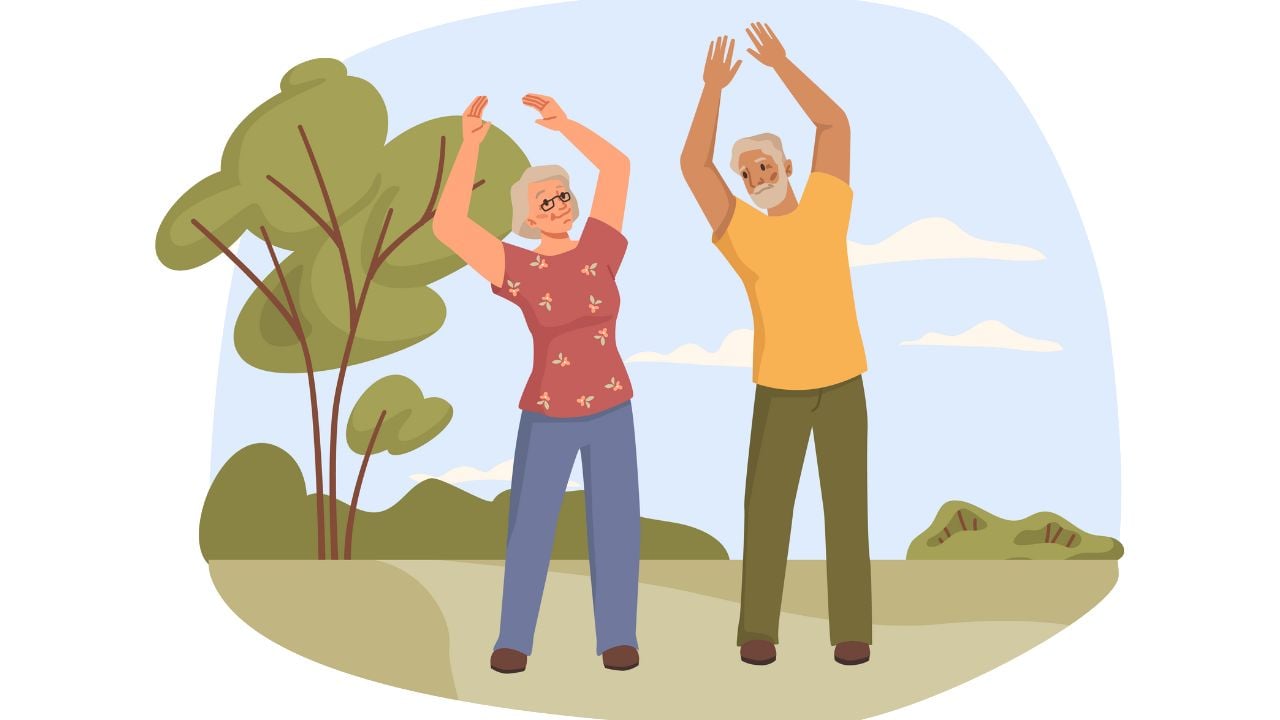
For older adults, exercise also helps maintain cognitive function and physical independence, further contributing to overall well-being and mental health.
Key Points
Rationale
Depression is a common condition affecting approximately 3.8% of the global population, with a higher prevalence of 5.7% among adults aged 60 and above (WHO, 2023).
In China, which is experiencing rapid population aging, survey data indicates that 33.1% of adults aged 60 and above exhibit depressive symptoms.
Its management is particularly challenging due to older adults’ poor tolerance of pharmacotherapy and the frequent co-occurrence of chronic illnesses (Dwyer et al., 2020).
Given the prevalence and treatment costs associated with mental health disorders in older adults, exercise has gained attention as a viable complementary or alternative strategy in depression management (Pedersen & Saltin, 2015).
Physical exercise has been widely recommended for treating depression due to its positive effects on mood, anxiety, and overall physical and psychological well-being (Stanton & Reaburn, 2014; Ravindran et al., 2018).
Previous studies have demonstrated that physical exercise can help alleviate mild to moderate depression, anxiety, and panic disorder (Brosse et al., 2002).
While numerous studies have explored the effects of physical exercise on depressive symptoms in older adults, there is considerable variation in the specific exercise modalities, outcome measures, and experimental designs used across studies.
This systematic review and meta-analysis aims to comprehensively assess the existing research on the impact of physical exercise on depressive symptoms in older adults, considering a wide range of outcome indicators and exercise modalities.
Method
Thissystematic reviewandmeta-analysisadhered to the PRISMA (Preferred Reporting Items for Systematic Reviews and Meta-Analyses) guidelines and the Cochrane Handbook for Systematic Reviews of Interventions.
The study was registered with PROSPERO (International prospective register of systematic reviews) under the registration number CRD42023405525.
Search strategy and terms
The researchers conducted a comprehensive search of published studies examining the relationship between physical exercise and depressive symptoms in older adults.
The following databases were searched: Cochrane Library, Web of Science, PubMed, Embase, CNKI, and Wanfang. The search included studies available until January 7, 2024.
English search terms used were “exercise,” “older adults,” and “depression,” while Chinese search terms were “physical exercise,” “older adults,” and “depression.”
The search was extended to grey literature sources, although no relevant results were found. References of included studies were also reviewed to ensure comprehensive coverage.
Inclusion and exclusion criteria
Inclusion criteria:
Exclusion criteria:
Statistical measures
The meta-analysis was conducted using Review Manager 5.3 and Stata 16.0 software.
Standardized mean difference (SMD) and 95% confidence intervals (95% CI) were used as effect sizes for continuous variables.
Heterogeneity was assessed using the I2 statistic, with a fixed-effects model applied when I2 < 50% and a random-effects model when I2 ≥ 50%.
Subgroup and sensitivity analyses were conducted to investigate potential sources of heterogeneity.
Publication bias was evaluated using Egger’s test and funnel plots, with a p-value threshold of <0.10 indicating potential bias.
Results
The systematic review identified 20 studies from 15 articles, involving a total of 1,346 participants (689 in control groups, 657 in experimental groups).
The meta-analysis revealed that physical exercise significantly improved depressive symptoms in older adults compared to control groups [SMD = -0.82, 95% CI (-1.19, -0.45)].
Subgroup analyses were conducted to explore the effects of exercise intervention time, physical exercise intensity, and exercise type on depressive symptoms:
The study did not find significant effects for aerobic exercise or yoga in improving depressive symptoms in older adults.
Sensitivity analysis identified one study (Lyu, 2012) as a potential source of significant heterogeneity. Egger’s test (p = 0.731) showed no significant publication bias.
Insight
This systematic review and meta-analysis provides robust evidence that physical exercise can significantly improve depressive symptoms in older adults.
Key insights include:
The results suggest that tailored exercise programs, particularly those incorporating resistance training and group activities, may be more effective than general recommendations for increased physical activity.
Further research could explore:
Strengths
The study had many methodological strengths including:
Limitations
The study had several limitations that should be considered when interpreting the results:
These limitations suggest caution in generalizing the results and highlight areas for future research to address these gaps and strengthen the evidence base.
Implications
The findings of this systematic review and meta-analysis have several significant implications for clinical practice, public health policy, and future research:
These implications underscore the potential of exercise as a cost-effective, non-pharmacological approach to managing and preventing depression in older adults, with wide-ranging benefits for individuals, healthcare systems, and society at large.
References
Primary reference
Li, X., He, S., Liu, T., Zhang, X., Zhu, W., Wang, C., & Sun, Y. Impact of Exercise Type, Duration, and Intensity on Depressive Symptoms in Older Adults: A Systematic Review and Meta-Analysis.Frontiers in Psychology,15, 1484172.https://doi.org/10.3389/fpsyg.2024.1484172
Other references
Brosse, A. L., Sheets, E. S., Lett, H. S., & Blumenthal, J. A. (2002). Exercise and the treatment of clinical depression in adults: recent findings and future directions.Sports medicine,32, 741-760.https://doi.org/10.2165/00007256-200232120-00001
Cooney, G. M., Dwan, K., Greig, C. A., Lawlor, D. A., Rimer, J., Waugh, F. R., … & Mead, G. E. (2013). Exercise for depression.Cochrane database of systematic reviews, (9).https://doi.org/10.1002/14651858.CD004366.pub6
Dwyer, J. B., Aftab, A., Radhakrishnan, R., Widge, A., Rodriguez, C. I., Carpenter, L. L., … & APA Council of Research Task Force on Novel Biomarkers and Treatments. (2020). Hormonal treatments for major depressive disorder: state of the art.American Journal of Psychiatry,177(8), 686-705.https://doi.org/10.1176/appi.ajp.2020.19080848
Fox, K. R., Stathi, A., McKenna, J., & Davis, M. G. (2007). Physical activity and mental well-being in older people participating in the Better Ageing Project.European journal of applied physiology,100, 591-602.https://doi.org/10.1007/s00421-007-0392-0
Lyu, X. (2012). The impact of different types of physical exercise on the mental health of older adults.Chinese Journal of Gerontology, 32,1020-1023.
Pedersen, B. K., & Saltin, B. (2015). Exercise as medicine–evidence for prescribing exercise as therapy in 26 different chronic diseases.Scandinavian journal of medicine & science in sports,25, 1-72.https://doi.org/10.1111/sms.12581
Ravindran, A. V., Balneaves, L. G., Faulkner, G., Ortiz, A., McIntosh, D., Morehouse, R. L., … & Lam, R. W. (2018). Canadian Network for Mood and Anxiety Treatments (CANMAT) 2016 clinical guidelines for the management of adults with major depressive disorder: Section 5. Complementary and alternative medicine treatments.The Canadian Journal of Psychiatry, 61(9), 576-587.
Stanton, R., & Reaburn, P. (2014). Exercise and the treatment of depression: a review of the exercise program variables.Journal of science and medicine in sport,17(2), 177-182.https://doi.org/10.1016/j.jsams.2013.03.010
World Health Organization. (2023).Depression.https://www.who.int/news-room/fact-sheets/detail/depression
World Health Organization. (n.d.).Ageing and health.https://www.who.int/news-room/fact-sheets/detail/ageing-and-health
Keep Learning

Saul McLeod, PhD
BSc (Hons) Psychology, MRes, PhD, University of Manchester
Saul McLeod, PhD., is a qualified psychology teacher with over 18 years of experience in further and higher education. He has been published in peer-reviewed journals, including the Journal of Clinical Psychology.
Olivia Guy-Evans, MSc
BSc (Hons) Psychology, MSc Psychology of Education
Olivia Guy-Evans is a writer and associate editor for Simply Psychology. She has previously worked in healthcare and educational sectors.
