Bad communication is inconsistent, unclear, and often dishonest. It includes numerous behaviors and attitudes that damage trust, understanding, and intimacy in a relationship — as such, it’s the “silent killer” of relationships.
In contrast, good communication establishes trust, builds emotional connections, supports conflict resolution and joint decision-making, and prevents misunderstandings.
Therefore, it’s the foundation for a healthy, supportive, and enduring relationship.
Bad communication in relationships can involve a lack of listening and understanding, unhelpful communication styles, and other behaviors and attitudes that make interactions challenging.
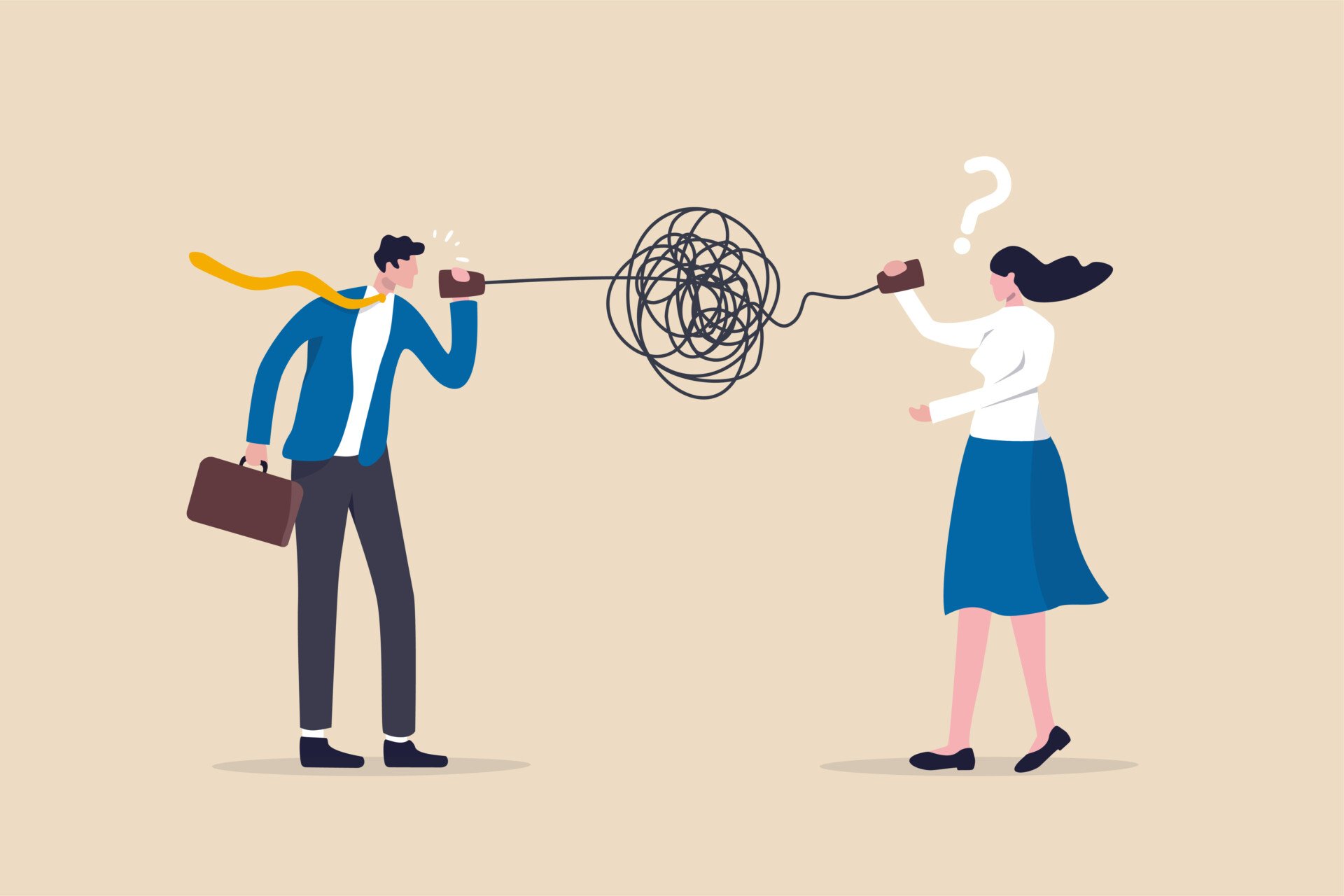
To illustrate how bad communication can manifest in a relationship, I’ll use Mike and Naomi as examples of a couple who have struggled with this.
1. Poor Listening Skills
Actively listening and engaging with the other person is one of the main pillars of good communication.
Poor listeners may be easily distracted, fail to engage with the speaker, and prioritize their own thoughts and opinions over those of the other person.
If you have poor listening skills, you might not be fully present during the interaction, interrupt the other while they’re speaking, don’t try to understand their perspective, and ask leading questions (i.e., you’re looking for a specific answer rather than wanting to know how they truly feel).
For example, when Naomi tells Mike about her day, Mike is often somewhere completely different in his thoughts. He mutters the occasional “hm” and “yeah,” but he doesn’t ask any questions and isn’t fully engaged.
Naomi, on the other hand, often interrupts Mike when he’s speaking, especially when there’s a difference of opinion. She raises her voice and cuts him off mid-sentence to get her point across.
2. Unhelpful Communication Styles
Partners might have unhelpful communication styles such as passive, aggressive, or passive-aggressive ways of expressing themselves.
3. Criticism
Criticizing your partner without offering constructive feedback or suggestions can lead to defensiveness and resentment. It’s the first of the four main predictors of divorce, according to relationship expert John Gottman.
Similarly, using generalized statements like “you always” or “you never” ignores your partner’s positive actions and conveys feelings of blame and resentment.
Such statements are usually exaggerations and can make the partner feel attacked or unappreciated.
For example, Mike often criticizes Naomi’s looks and weight, while Naomi criticizes Mike for being lazy. She often gets frustrated because he doesn’t help with the household. She shouts at him, “You never help with the chores”, instead of suggesting ways they could divide them up.
Note, while it’s not necessarily her responsibility to do so, making suggestions is a more constructive approach and would help in their communication.
4. Defensiveness
Partners becoming defensive in the face of constructive feedback and criticism can hinder resolution and lead to more conflict. It’s the third of the four main predictors of divorce, according to relationship expert John Gottman.
For example, when Mike confronts Naomi about her interrupting him when he’s talking, she becomes defensive and says, “It’s because what you’re saying is untrue!”.
5. Contempt
Contempt means you treat your partner with disdain and scorn and make them feel like they and their opinions are worthless. It’s the last of the four main predictors of divorce according to relationship expert John Gottman.
For example, Naomi had a picture of them printed and framed but when she showed it to Mike, he huffed and said, “That’s so cheesy.”
Naomi became upset and started to cry. In response, Mike rolled his eyes and said, “Why do you always have to make such a big deal? It’s just a stupid photo.”
Contemptuous behavior can create a toxic atmosphere in the relationship, eroding trust, respect, and emotional connection.
6. Stonewalling
This term refers to turning away from another person and refusing to engage with them (a.k.a. “the silent treatment”). According to relationship expert John Gottman, it’s the second of the four main predictors of divorce.
Stonewallingoccurs when one partner completely withdraws from the conversation, refusing to engage or respond.
This behavior can cause the other person emotional harm because being excluded and ignored triggers the stress response (fight/flight) and increases anxiety.
Over time, stonewalling can erode trust and emotional connection in the relationship, as the other partner may feel increasingly helpless, frustrated, and emotionally isolated.
Stonewalling also prevents the resolution of conflicts and the addressing of important issues in the relationship. By refusing to engage in the conversation, the stonewalling partner effectively shuts down any possibility of finding a solution or reaching a compromise.
It’s important to consider the context when it comes to stonewalling. For example, it’s common for those who areneurodivergentto struggle with eye contact and portraying “appropriate” facial expressions. This just means they communicate differently (not poorly).
7. Dismissiveness
Dismissing your partner’s feelings, thoughts, and opinions is invalidating and potentially manipulative.
When Mike shares how he feels and Naomi says, “You’re just overreacting” or “You shouldn’t feel that way” she’s dismissing (orgaslighting) him.
Using language like this can make a partner feel devalued and cause them to become reluctant to share their thoughts and feelings openly.
8. Avoidance
You don’t have to talk to your partner about everything, but deliberately avoiding difficult topics and withholding important information or feelings can be damaging to a relationship.
While it’s okay to take breaks from difficult conversations to cool down and gather your thoughts, avoiding them altogether can create resentment and hinder progress towards a resolution.
Withholding information can be harmful. Bottling up feelings or important information can lead to resentment, anger, and eventually, a breakdown in communication.
For example, a few years ago, Naomi cheated on Mike. They didn’t break up, but Mike refused to talk about it.
When she tries to address the issue, he dismisses her, but on the inside, he feels resentful and hurt. He has angry outbursts and is often distant, refusing to engage in meaningful conversations with Naomi.
9. Making Assumptions
Making assumptions about your partner’s feelings, thoughts, or intentions without asking is not conducive to healthy communication.
This also includes predicting what the other person will say. Often, when you try to predict what the other person is thinking, feeling, or about to say, you’re basing that on your own perceptions, feelings, and insecurities – not objective reality.
Assuming your partner can read your mind is also problematic for communication. Expecting them to know what you want or need without clearly communicating that can lead to unmet expectations and frustration.
10. Continuous cycles of the same argument
Continuous cycles of the same argument are a clear sign of poor communication in a relationship.
When couples find themselves constantly rehashing the same issues without resolution, it can lead to feelings of stagnation and frustration.
These repetitive quarrels often stem from common negative elements in their conversations, such as criticism, defensiveness, contempt, and stonewalling.
What’s the Impact of Bad Communication?
Bad communication is damaging to a relationship because it can lead to the following outcomes:
Misunderstandings
Poor communication can lead to misunderstandings.
For example, if they say, “I need a bit of time alone when I get home from work” (without an explanation), you might interpret that to mean “She’s abandoning me” or “She doesn’t love me anymore” depending on your level of security.
This kind of interaction can easily lead to hurt feelings and conflict.
Resentment and Frustration
Unresolved conflicts and unexpressed feelings can build up over time, leading to resentment and frustration.
If one or both partners don’t express their feelings clearly and compassionately or avoid certain topics, they will experience a disconnect, which can be frustrating and upsetting (as with the example of Mike and Naomi above).
You might resent your partner for holding their feelings and thoughts back from you and not allowing you into their inner world.
Lack of Trust
You want the other person to listen and understand who you are, be present with you, and feel you can share your feelings and thoughts with them.
So, if they constantly make you feel unheard, dismissed, or invalidated, it erodes the trust between you.
Decreased Intimacy
Without open and honest communication, partners grow emotionally (and often physically) distant. They’re not connecting on a deeper level so the relationship can become shallow.
When communication is constantly challenging, one or both partners may withdraw emotionally to protect themselves, which further exacerbates poor communication and lack of intimacy.
Conflict Escalation
Conflict and arguments are a normal part of any relationship but in a healthy relationship, this conflict can be resolved effectively through good communication.
If communication is poor, it not only leads to more conflict (due to misunderstandings, lack of trust, dissatisfaction, etc.) but can escalate the conflict.
In other words, if the skills to resolve conflict are missing, arguments can become unnecessarily intense and damage the relationship.
Impact on Others
If you have a family or spend a lot of time with other people, they will likely notice the poor communication – or at least the outcome of poor communication: tension, arguments, and uneasy or awkward interactions.
It can lead to feelings of insecurity and instability for the whole family unit and/or make your friends very uncomfortable.
Relationship Dissolution
Poor communication means you’re likely less satisfied, lonely, and disillusioned in the relationship for all the above reasons. If the issues relating to poor communication can’t be resolved, it might lead to a breakup.

Saul McLeod, PhD
BSc (Hons) Psychology, MRes, PhD, University of Manchester
Saul McLeod, PhD., is a qualified psychology teacher with over 18 years of experience in further and higher education. He has been published in peer-reviewed journals, including the Journal of Clinical Psychology.
Olivia Guy-Evans, MSc
BSc (Hons) Psychology, MSc Psychology of Education
Olivia Guy-Evans is a writer and associate editor for Simply Psychology. She has previously worked in healthcare and educational sectors.
Anna DrescherMental Health WriterBSc (Hons), Psychology, Goldsmiths University, MSc in Psychotherapy, University of QueenslandAnna Drescher is a freelance writer and solution-focused hypnotherapist, specializing in CBT and meditation. Using insights from her experience working as an NHS Assistant Clinical Psychologist and Recovery Officer, along with her Master’s degree in Psychotherapy, she lends deep empathy and profound understanding to her mental health and relationships writing.
Anna DrescherMental Health WriterBSc (Hons), Psychology, Goldsmiths University, MSc in Psychotherapy, University of Queensland
Anna Drescher
Mental Health Writer
BSc (Hons), Psychology, Goldsmiths University, MSc in Psychotherapy, University of Queensland
Anna Drescher is a freelance writer and solution-focused hypnotherapist, specializing in CBT and meditation. Using insights from her experience working as an NHS Assistant Clinical Psychologist and Recovery Officer, along with her Master’s degree in Psychotherapy, she lends deep empathy and profound understanding to her mental health and relationships writing.
